

If there is one thing Vienna does exceptionally well, it is public transport. The first time you step into a Vienna metro station, you notice it immediately: everything feels organised, calm and surprisingly intuitive. Trains arrive frequently, platforms are clearly marked, and even during busy hours the system rarely feels chaotic.
For visitors, the Vienna U-Bahn is often the easiest way to get around. You can cross the city in minutes, without worrying about traffic or parking, and most major sights are located just a short walk from a metro station. After a day of exploring, hopping on the metro feels almost effortless.
Locals usually refer to the metro simply as the “U”, short for Untergrundbahn. When someone says, “take the U3” or “change at U1”, they are talking about specific metro lines. Once you get used to this system, navigating Vienna becomes second nature.
A few things you quickly learn about the Vienna metro
The Vienna U-Bahn network stretches across more than 83 kilometres and includes 98 stations. On an average weekday, around 1.5 million people use the metro. That alone tells you something important: this is not a transport system built for tourists, but for daily life.
Viennese residents rely heavily on public transport. More than 1.2 million people hold an annual travel pass, which explains why you often see students, office workers and retirees sharing the same carriage. For visitors, this is part of the experience: you move through the city the same way locals do.
To make the most of the metro system, it’s best to use a day pass or the Vienna Card, which allows unlimited travel and provides discounts on many attractions and landmarks.
By 2026, the U5 line will be fully autonomous, with driverless metro trains operating on the route. In preparation for this, platform screen doors will be installed along the U5 stations by 2025 to ensure smooth and safe operation.
Fun fact: Vienna regularly ranks among the world’s most liveable cities, and affordable, reliable public transport is one of the key reasons.
Which ticket makes sense for a city trip?
If you stay in Vienna for more than a day, unlimited travel tickets are usually the best option. A 24-, 48- or 72-hour pass allows you to use the metro, trams, and buses as often as you like, without having to think about individual journeys.
The Vienna Card is popular with first-time visitors. Besides unlimited public transport, it offers discounts on museums, exhibitions, and attractions across the city. If you plan to visit several sights, this card can quickly pay off.
Single tickets are available, but they make more sense for occasional use. Most travellers appreciate the freedom of simply walking into a station and boarding the next train.
Where Vienna’s metro is heading
Vienna continues to invest heavily in public transport. One of the most interesting developments is the new U5 line, which will be the city’s first fully automated metro line. Trains will operate without drivers, supported by platform screen doors to improve safety and efficiency.
This kind of innovation fits Vienna’s long-term vision: keeping the city easy to move around while reducing noise, emissions, and congestion.
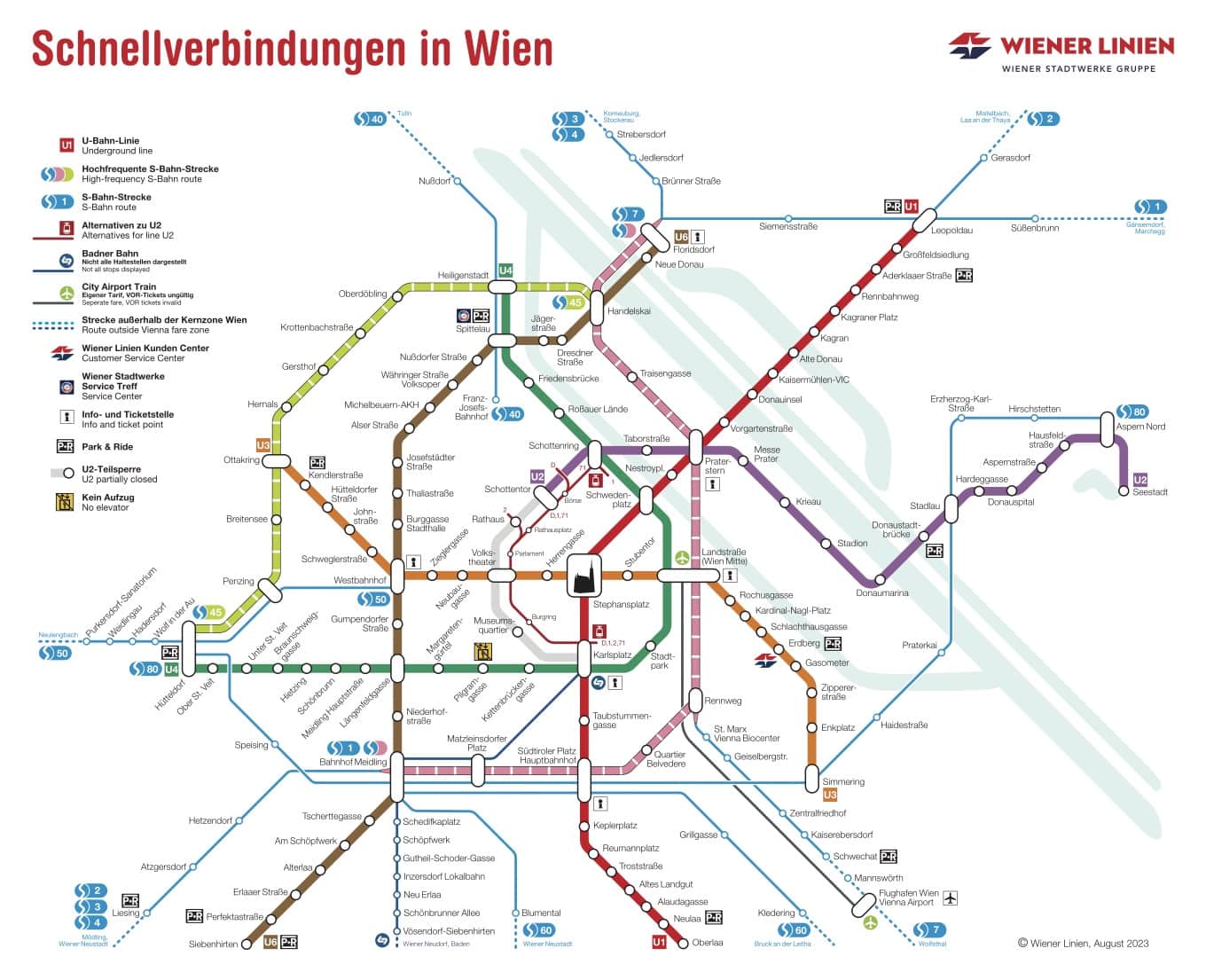
Understanding Vienna’s five metro lines
The Vienna metro opened in 1976, which makes it relatively young compared to some other European systems. Today, the network consists of five colour-coded lines, all clearly marked on maps and station signage. Free network maps are available at most major stations.
U1 – Red line – Reumannplatz to Leopoldau
The U1 runs north to south and is one of the most useful lines for visitors. Stops like Stephansplatz, Karlsplatz and Praterstern connect you directly to major sights. It also serves Vienna Central Station, which is important if you arrive by train or travel to the airport.
U2 – Purple line – Seestadt to Karlsplatz
The U2 is closely linked to culture and events. It serves MuseumsQuartier, Rathaus and Prater, making it a practical choice for museum visits or concerts. During large events, this line can get busy, but trains run frequently.
U3 – Orange line – Ottakring to Simmering
If you spend time shopping or moving between different districts, you will likely use the U3. With stops like Stephansplatz, Landstraße and Volkstheater, it cuts straight through the heart of the city.
U4 – Green line – Hütteldorf to Heiligenstadt
The U4 follows the course of the Wien River and connects western Vienna with the north. Some stations still feature older architecture, which gives this line a slightly different atmosphere. Karlsplatz and Stadtpark are the most relevant stops for visitors.
U6 – Brown line – Siebenhirten to Floridsdorf
The U6 largely bypasses the historic centre and mainly serves residential areas. Unless your accommodation is located along this route, you probably won’t need this line during a short city break.
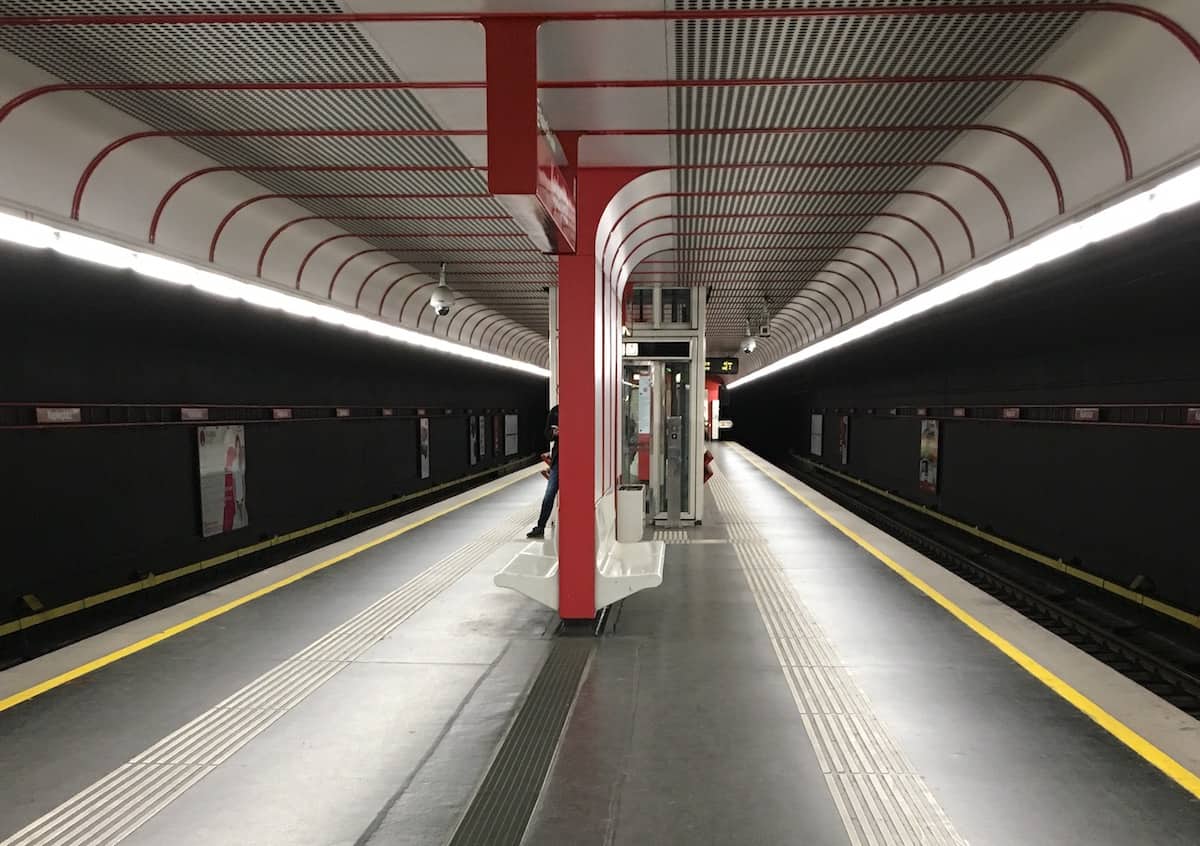
How to Buy a Ticket for the Metro in Vienna?
Metro tickets can be purchased at ticket machines in stations, at Wiener Linien service points or online via official apps. Machines are easy to use and available in multiple languages.
Most tickets must be validated before first use. You do this by inserting your ticket into one of the blue validation machines found at station entrances or on platforms. Once validated, the ticket is ready to use.
A common mistake among visitors is assuming tickets can be bought on board or from inspectors. This is not the case, so make sure your ticket is valid before entering the platform area.
Here is an overview of the available ticket options:
- Single Ticket: This ticket allows travel for a single journey.
- 24-Hour Ticket: With this ticket, you can enjoy unlimited travel for the selected duration.
- Vienna Card: This card offers free use of public transportation and discounts on various attractions.
- Weekly Pass: As the name suggests, this pass provides unlimited public transport for a full week. It is transferable and valid for multiple people. However, you cannot choose the start date yourself—the validity begins on Monday at 00:00 and lasts until the following Monday at 09:00.
- 8-Day Flexible Ticket: This ticket is valid for 8 days of your choice. It can also be used by multiple travellers.

Almost all tickets must be validated before use. You can read how this works here, where we also provide information on where to purchase tickets both online and in person.
Important: You cannot buy tickets from ticket inspectors.
Important interchange stations
Some stations are especially useful for changing lines or orienting yourself within the city:
- Karlsplatz – U1, U2, and U4
- Landstraße – U3 and U4
- Längenfeldstraße – U4 and U6
- Praterstern – U1 and U2
- Schottenring – U2 and U4
- Schwedenplatz – U1 and U4
- Spittelau – U4 and U6
- Stephansplatz – U1 and U3
- Volkstheater – U2 and U3
- Westbahnhof – U3 and U6
Reaching Vienna’s main attractions by metro
Most major sights are conveniently located near a metro station, including:
- Schönbrunn Palace
- Prater and the Giant Ferris Wheel
- St. Stephen’s Cathedral and the historic centre
- MuseumsQuartier
- Hofburg Palace
- Rathaus (City Hall)
- Kunsthistorisches and Naturhistorisches Museum
- Hundertwasserhaus
- Naschmarkt
Using the metro not only saves time, it also gives you a feel for daily life in Vienna. And once you get used to it, you may find yourself missing it when you return home.