
Roasted chestnuts, hot wine with cinnamon and freshly fried dough: you smell a Vienna Christmas market before you see it. Between the ornaments and handmade gifts there are enough food stalls to put together a full dinner. Start with a crispy lángos or a plate of Käsespätzle, and save room for Kaiserschmarrn with plum compote.
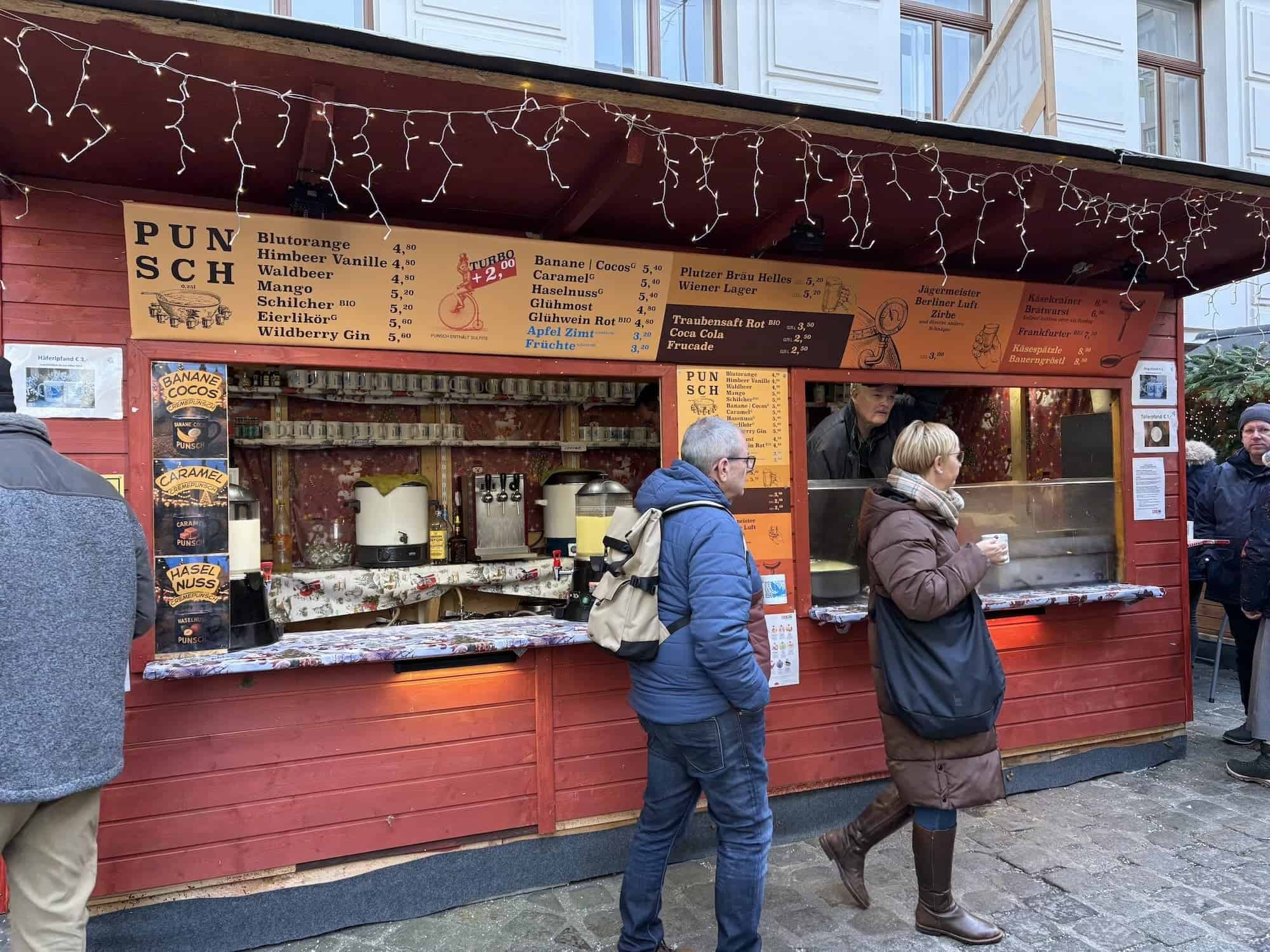
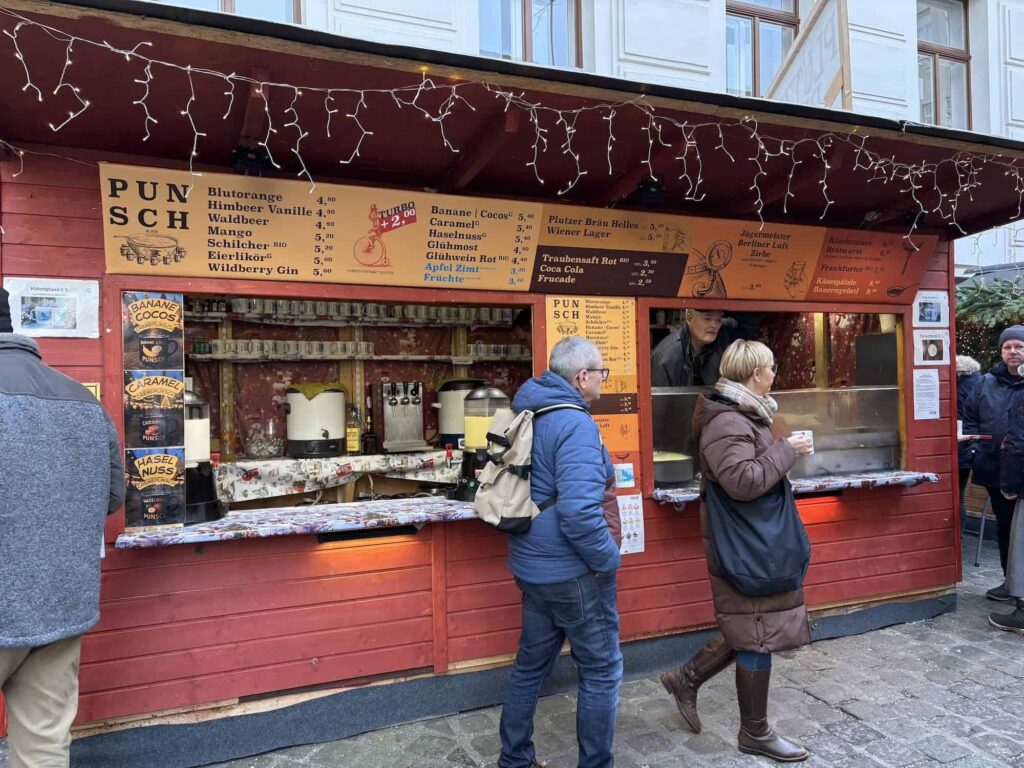
The drinks menu needs a little decoding too. Next to red and white Glühwein you’ll often see a whole board of Punsch flavors. What’s the difference, which drinks are actually alcohol-free, and why did you just pay five euros for a mug? Here’s what to order, and what to expect when you do.
From a quick snack to a full meal
What’s on offer varies by market and by stall. Some huts stick to chestnuts, sausages and hot drinks; others serve proper Austrian dishes. Walk one lap before you order. A big lángos is surprisingly filling, and it’s a shame to discover the stall you really wanted to eat at only after you’ve finished.
Maroni: hot chestnuts to go
Stalls marked Maroni roast sweet chestnuts on a hot plate. You get them in a paper bag and peel them yourself. Under the dark shell is a soft, slightly sweet, nutty chestnut. Straight off the plate they can be very hot. Many chestnut stalls also sell roasted potato slices.
Lángos: fried dough with garlic
This Hungarian snack has earned a permanent spot at Vienna’s markets. Lángos is a flat disc of deep-fried dough, crisp outside and soft inside. The classic version is brushed with garlic water or garlic oil. With sour cream, grated cheese or ham on top it becomes a small meal, so share a loaded one if you want to try more. Eat it right away: it’s at its best hot.
Würstel, Käsekrainer and Leberkäse
A hot sausage with bread and mustard is the easy savory option. You’ll see Bratwurst, Frankfurter and Käsekrainer, a hearty sausage with little pockets of cheese inside. Careful with the first bite: that melted cheese is seriously hot.
Leberkäse is a finely ground meat loaf, baked in a large block and cut into thick slices. Despite the name, the usual Austrian version contains neither liver nor cheese; Käseleberkäse does have cheese. It usually comes in a Semmel, a crusty white roll, with mustard on the side.
Potato pancakes and baked potatoes
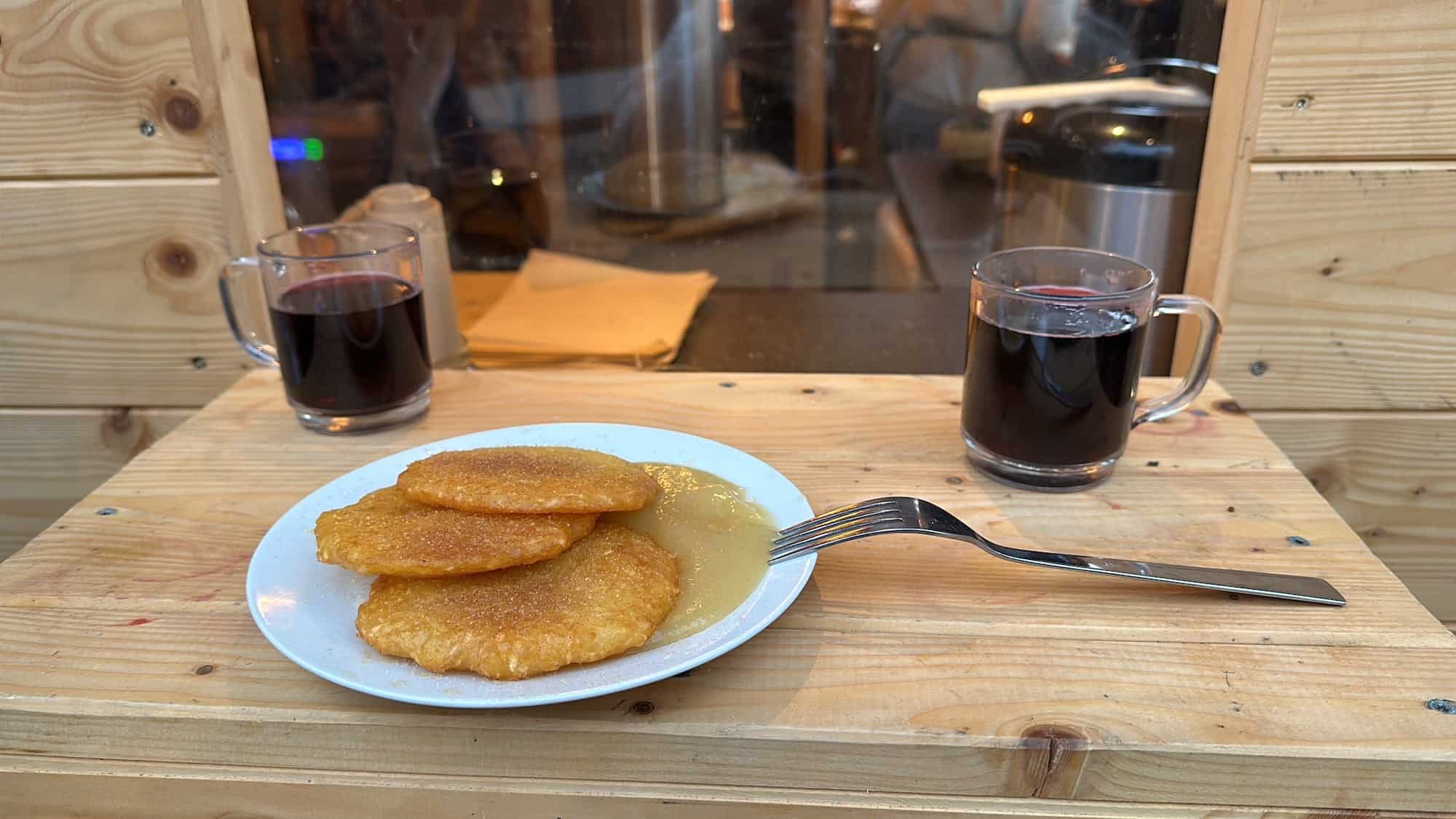
Kartoffelpuffer or Erdäpfelpuffer are crispy pancakes of grated potato (Erdäpfel is the Austrian word for potatoes). A portion is easy to share between browsing. Hungrier? Look for Ofenkartoffeln or Ofenerdäpfel, baked potatoes with an herb sauce, cheese or bacon. The topping decides whether it’s vegetarian and how filling it gets.
Käsespätzle, Knödel and other Austrian dishes
For a real hot meal, look for the stalls with Austrian home cooking. Käsespätzle (also called Kasspatzln) are small egg-dough dumplings in melted cheese, usually topped with fried onions. They’re filling and easiest to eat at a standing table.
The same stalls often sell Knödel: dumplings made from bread or potato, sometimes filled. Ask which kind it is, because a cheese or spinach Knödel is a very different thing from a sweet one filled with fruit. Other names worth knowing are Gröstl (fried potatoes, usually with onion and meat or bacon), Krautfleckerl (small pasta squares with fried cabbage) and Schinkenfleckerl (the same pasta with ham). Depending on the market you’ll also find soup, goulash, schnitzel sandwiches or bread rolls with roast pork.
Share one savory dish, then pick something sweet to share as well. Lángos with toppings, Käsespätzle and big Knödel fill you up fast, and you’ll want room to try more than one thing.
Sweet treats: save room for Kaiserschmarrn
In Austria, sweet dough dishes are called Mehlspeisen: strudel, pancakes, sweet dumplings and more. They’re not always small desserts. Some portions work perfectly well as a meal.
Kaiserschmarrn with apple sauce or plum compote
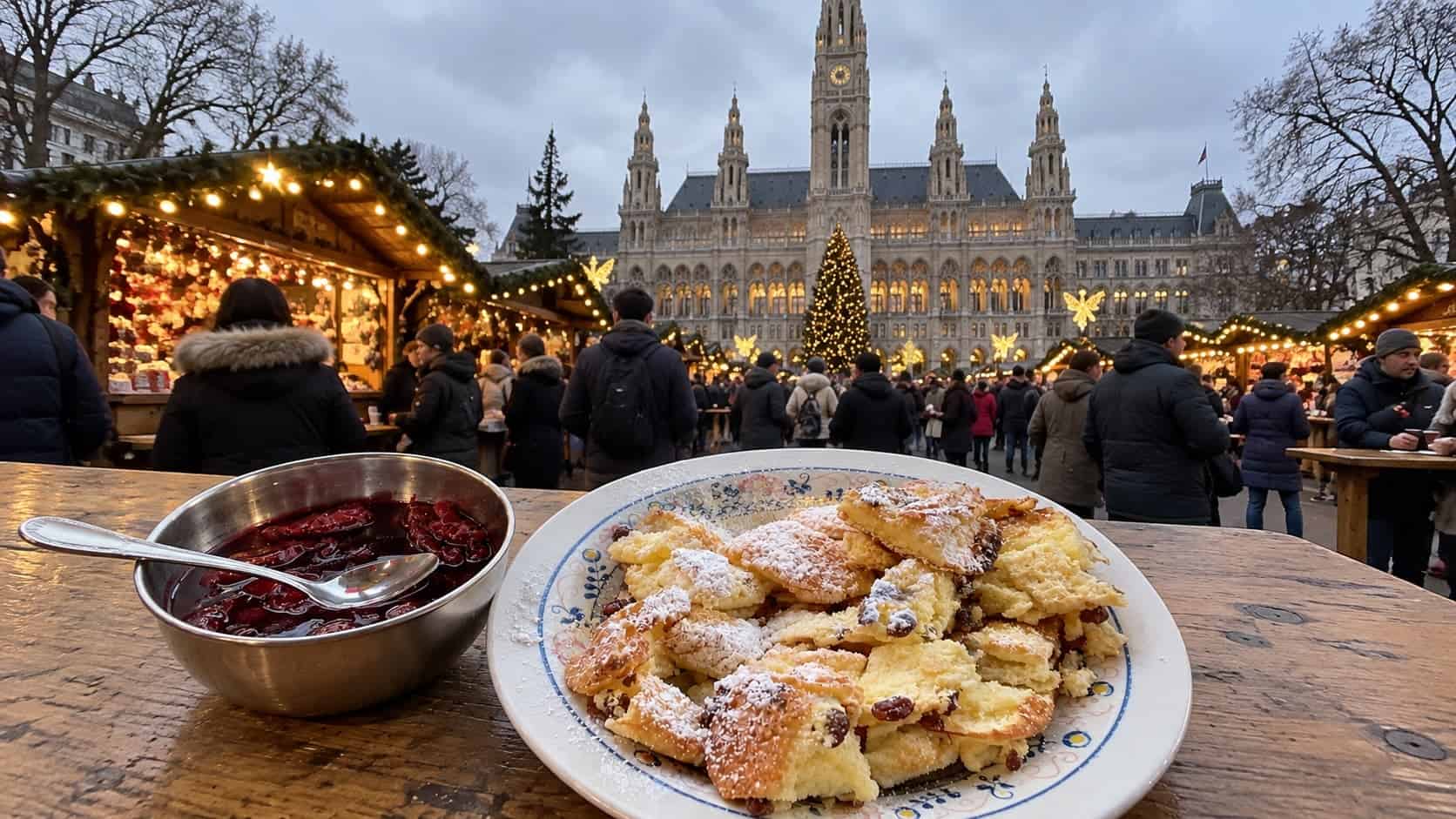
Kaiserschmarrn is fluffy pancake batter that’s torn into pieces while it cooks and dusted with powdered sugar. It usually comes with apple sauce or Zwetschkenröster, a plum compote. Some versions have raisins, some don’t. Order where it’s being cooked fresh: straight from the pan is when it’s fluffiest. One portion with two forks is plenty.
Krapfen and Gebackene Mäuse
A Krapfen is a fried yeast doughnut, usually filled with apricot jam and dusted with sugar. Bauernkrapfen are flatter in the middle with a thick rim and the jam on top. Don’t let the name Gebackene Mäuse (“fried mice”) put you off: these are small bites of fried batter with powdered sugar.
Mohnnudeln and Germknödel
Mohnnudeln are soft, finger-shaped potato-dough noodles tossed with ground poppy seeds, sugar and butter. Don’t expect regular pasta: they’re soft, and the poppy seeds taste nutty. The Germknödel is a large steamed yeast dumpling filled with Powidl, a thick plum butter, and served with melted butter or vanilla sauce and poppy seed sugar. That’s a meal, not a snack. Not every market sells these, so look around if you want to try them.
Strudel, Palatschinken and crêpes
Apfelstrudel is thin pastry rolled around apples, usually with cinnamon and raisins; Topfenstrudel has a sweet quark filling. Palatschinken are thin Austrian pancakes, often filled with apricot jam or chocolate. Some markets also sell crêpes and waffles.
Roasted almonds, Lebkuchen and Christmas cookies
Gebrannte Mandeln are almonds with a crunchy sugar coating; you’ll usually smell the stall before you find it. Lebkuchen is spiced gingerbread, from plain pieces to chocolate-coated ones and big decorated hearts. For eating on the spot, a small piece is more practical than a heart with a message piped on it. Stalls with Christmas baking also sell Vanillekipferl, crescent-shaped vanilla cookies. A bag of cookies or almonds makes an easy souvenir.
Glühwein or Punsch: what’s the difference?
The base is what sets them apart. Glühwein is hot spiced wine. Punsch is a mixed drink, and the recipe changes from stall to stall. Both can be sweet and spicy, but Punsch comes in far more variations.
Glühwein: red or white wine with spices
Glühwein is red or white wine heated with sugar and spices such as cinnamon and cloves, sometimes with citrus. In Vienna you’ll find both roter Glühwein and weißer Glühwein. White can taste a little fresher, but how sweet it is depends on the recipe. Wine is always the base, so regular Glühwein contains alcohol.
Punsch: tea, fruit, spices and often rum
There’s no single Christmas-market Punsch recipe. A classic one combines tea, orange juice, sugar and spices with rum; others use wine, liqueur or other spirits. Common flavors are orange (Orangenpunsch), berries, apple and apricot (Marillenpunsch). There are creamy versions with eggnog liqueur too.
A fruity name doesn’t make a drink alcohol-free. Apple or berry Punsch can easily contain rum, and sweetness tells you nothing about how strong it is.
Alcohol-free options
Kinderpunsch is the best-known alcohol-free drink. Despite the name (“children’s punch”), adults order it all the time. It’s usually made with fruit tea and/or juice and winter spices. Some stalls also list alkoholfreier Punsch. Other good choices are hot chocolate (ask for it with Schlagobers, Austrian for whipped cream, and without rum), fruit or herbal tea, hot spiced apple juice and coffee.
Watch out for Glühmost: it isn’t simply hot apple juice. Most is fermented apple or pear cider, so it contains alcohol. Choose a drink that’s clearly labeled alcohol-free, or ask at the stall.
The mug deposit: how Pfand works
With your first hot drink you’ll usually pay a deposit for the mug or cup. On the price board it’s called Pfand, Häferlpfand or Einsatz (a Häferl is a mug). If the board says zzgl. Pfand, the deposit comes on top of the drink price.
The amount differs by market and sometimes by type of cup. For the 2026/27 season, the Wintermarkt at Riesenradplatz charges €5 for mugs, cups and glasses and €3 for reusable plastic cups, refunded in full if you return them undamaged. At other markets, check the board at the stall.
Sometimes you also get a deposit token
Some stalls hand you a small token, a Pfandmarke, with your drink. Keep it: you only get your deposit back when you return the mug and the token together. The system stops deposit collectors from grabbing mugs that are still in use. Put the token in the same pocket every time so you can find it later.
Return it or keep it as a souvenir
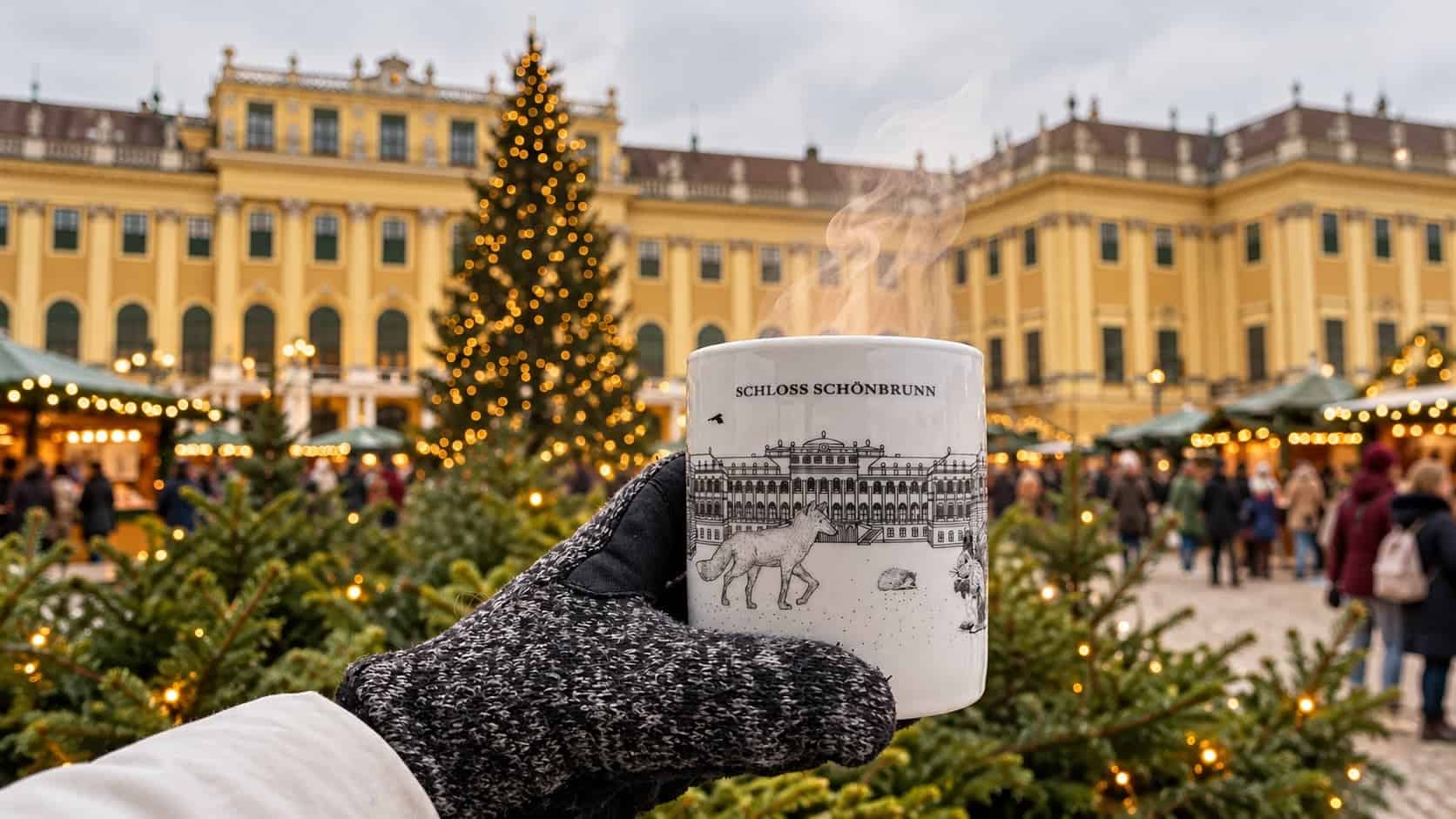
Ask where to return the mug when you order: the same stall, any participating stall, or a separate return point. Don’t assume a mug from one market can be returned at another, and return it before the stalls close. Many markets have mugs with their own design and year, and you’re usually welcome to keep one as a souvenir; you just don’t get the deposit back.
Stepping away for a photo? Keep an eye on your mug if you leave it on a standing table. A mug left alone isn’t necessarily an empty mug, but it can disappear, and without it you can’t claim your deposit, token or not.
Vegetarian and vegan food at the Christmas markets
You won’t go hungry without meat. Think Maroni, a baked potato with a suitable topping, or Krautfleckerl. Käsespätzle are usually vegetarian, but contain cheese and often egg. Some stalls clearly label vegan dishes, and the Art Advent market at Karlsplatz is one of the easiest markets for vegetarians and vegans.
Recipes differ by stall. Potato dishes can contain bacon, Knödel can contain meat, and sweet dishes are often made with milk, eggs and butter. Even lángos dough isn’t the same everywhere. If you need to avoid something, ask about the ingredients.
First time? Here’s what to order
For a snack while you walk, go for Maroni or roasted almonds. Want something savory? A garlic lángos or a Käsekrainer with bread. For a full meal: Käsespätzle, a loaded baked potato or a savory Knödel dish. Then save room for Kaiserschmarrn, or share a portion of Gebackene Mäuse. Add Glühwein, Punsch or an alcohol-free drink and find a standing table.
Before you leave, check for your mug and your deposit token, so you don’t end up with an accidental souvenir at the bottom of your bag. Planning which markets to visit? Our guide to all Vienna Christmas markets in 2026 has the dates and opening hours, and our guide to Viennese cuisine covers what to eat for the rest of your trip.
Frequently asked questions
What is the difference between Glühwein and Punsch?
Glühwein is hot wine (red or white) with sugar and spices. Punsch is a mixed drink with no fixed recipe: usually tea, fruit juice, sugar and spices with rum, wine or liqueur. Both normally contain alcohol.
Is there alcohol-free punch at Vienna’s Christmas markets?
Yes. Ask for Kinderpunsch or alkoholfreier Punsch, which adults can order too. Hot chocolate without rum, tea and hot apple juice are other options. Glühmost is not alcohol-free: Most is fermented cider.
How much is the mug deposit at Vienna’s Christmas markets?
It varies by market. At the Wintermarkt at Riesenradplatz it’s €5 for mugs, cups and glasses and €3 for reusable cups in 2026/27. You get the full deposit back when you return the mug undamaged, sometimes together with a deposit token.
Can I keep the Christmas market mug?
Usually, yes. If you keep it, you simply don’t get your deposit back. Many markets have mugs with their own design and year, which makes them a popular souvenir.
What should I eat at a Vienna Christmas market?
Popular choices are roasted chestnuts (Maroni), garlic lángos, Käsekrainer sausage, Käsespätzle and, for dessert, Kaiserschmarrn with plum compote. Share dishes if you want to try several things: many portions are large.