15 Surprising fun facts about Vienna you’ll love
Vienna may be renowned for its imperial palaces, world-class museums, and delicious Sachertorte. But beneath the grand façades and classical music lies a city full of quirks, contradictions, and little-known stories. Whether you’re planning your first visit or coming back for more, these fun facts will show you a side of Vienna that rarely makes it into the guidebooks.
1. Emperor Franz Joseph always ate lunch at noon – no exceptions
Even during the chaos of World War I, the emperor insisted on having lunch at exactly 12 o’clock. Court life was scheduled around his habits, not the other way around. His punctuality became legendary — a man of routine above all else.
2. The Viennese waltz began in the countryside, not the palace
Today it’s a symbol of elegance and ball season glamour, but the waltz actually originated in rural villages. It was once considered scandalous — too close, too fast, too intimate. The Viennese court resisted it for years before embracing it with full imperial flair.
3. Vienna has more sausage stands than pharmacies
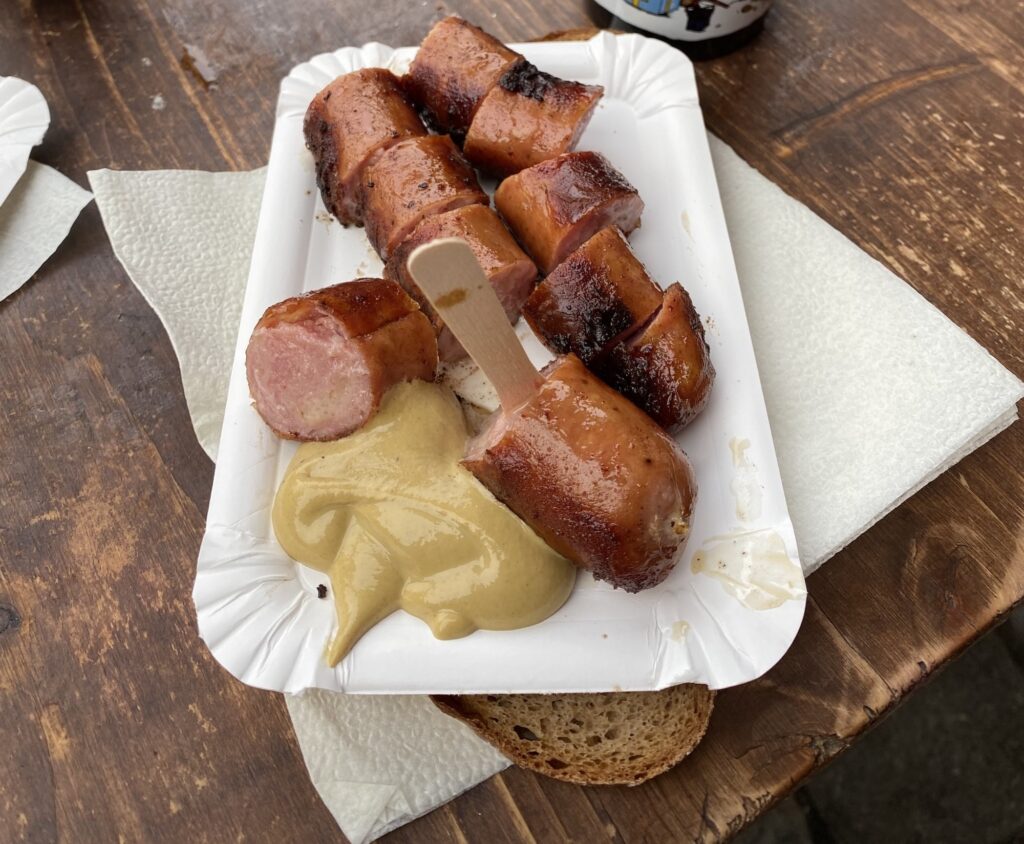
There are over 200 licensed sausage stands, or Würstelstände, across the city — many open day and night. Locals swear by the Käsekrainer (a cheese-filled sausage), especially after a night out. Forget kebabs — this is Vienna’s ultimate street food.
4. A British film put Vienna on the world stage
The 1949 film The Third Man turned post-war Vienna into a cinematic icon. Shot on location in the sewers, back alleys and on the Giant Big wheel in the Prater, it introduced millions to the city’s noir charm — and even today, fans flock to retrace the film’s steps.
Today, you can literally follow in the footsteps of the film: during the summer months, guided Third Man tours take you underground — quite literally — into the original filming locations. Just a heads-up: much of it takes place in the Vienna sewers. Yes, it smells a bit. But that’s part of the experience.
5. The Sachertorte sparked a decades-long court battle
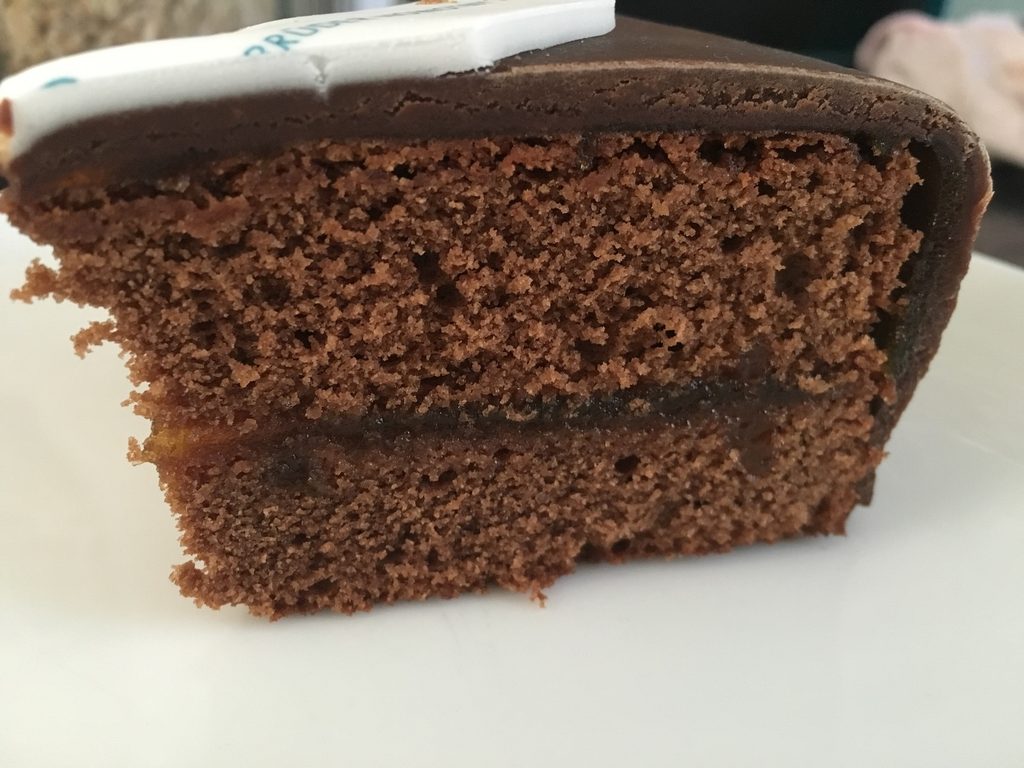
The Hotel Sacher and Café Demel once waged a legal war over who held the rights to call their chocolate cake the “original” Sachertorte. The dispute lasted until the 1960s and ended with a win for Hotel Sacher.
But here’s the local tip: while Hotel Sacher offers the official version, the experience can be… intense. Long queues, a dense slice of rich chocolate cake, and not much else. If you want more variety (and often a shorter wait), head to Demel. Their pastry counter is a dream, and their Konditormeister knows how to create far more than just a chocolate brick. Trust us—Vienna’s sweet scene goes well beyond Sachertorte.
And if you simply can’t wait, grab a portion of Kaiserschmarrn, prepared right there in the shop window while you watch. Hot, fluffy, and dusted with powdered sugar—it might just beat the cake.
6. Ancient Roman ruins lie under your feet at Michaelerplatz
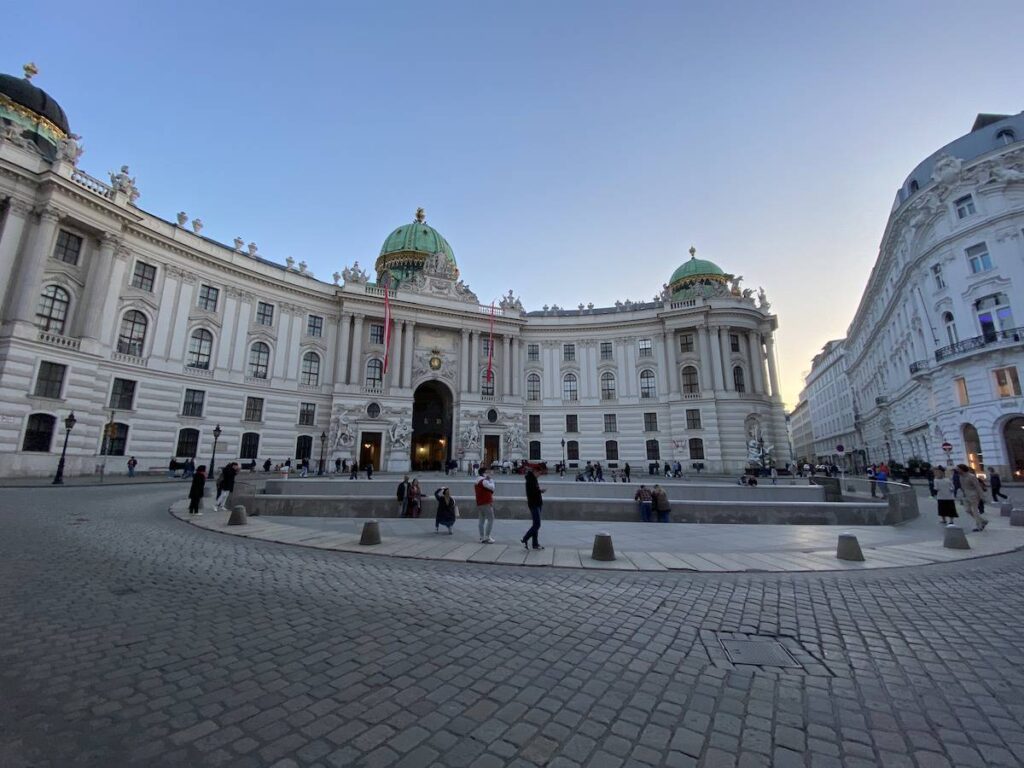
Right in front of the Hofburg Palace, you’ll find the exposed remains of a Roman settlement — a reminder that Vindobona (Vienna’s Roman name) was already a bustling place almost 2,000 years ago.
But Michaelerplatz isn’t the only place where Vienna’s underground tells stories. When digging began for the Stephansplatz U-Bahn station in the 1970s, workers stumbled upon something unexpected: the remains of a medieval chapel, long forgotten beneath the city. Known as the Virgilkapelle, this hidden Gothic chapel was once part of a larger burial site and is now open to the public. It’s a peaceful, eerie glimpse into Vienna’s medieval past — right below the busiest square in town.
7. Vienna has a toilet museum
Yes, you read that right. Housed in a former public restroom, the Klo & So Museum explores the history of hygiene, sanitation, and – quite literally – the city’s underground. Only in Vienna could this be both educational and oddly stylish.
8. Mozart didn’t really like living in Vienna
Despite spending much of his life here, Mozart frequently complained about the gossip, the snobbery, and the rigid social codes of Viennese society. Still, he composed some of his greatest works in the city — and Vienna now proudly claims him as its own.
9. The pandas at Schönbrunn Zoo were national celebrities
For years, the giant pandas at Tiergarten Schönbrunn were among the zoo’s most beloved residents. Their every move was covered in the news, and panda cub births were treated like royal events. There was even a live stream so fans could follow them 24/7.
However, as part of the international panda loan program, the panda family recently returned to China. But don’t worry — Schönbrunn Zoo is already in talks to welcome a new panda pair soon. Meanwhile, there’s still plenty to see in the world’s oldest zoo, including sloths, Siberian tigers, and a rainforest house that feels like a jungle in the middle of Vienna.
10. You can go sledding in Vienna’s city parks
During snowy winters, locals head to hilly parks like Türkenschanzpark and Pötzleinsdorfer Schlosspark to go sledding. It’s not just for kids — university students and even adults bring sleds or trays and join the fun.
11. Real-life spy games happened—and still happen—in Vienna.
Forget James Bond fiction—Vienna has long been a real-life playground for spies. During the Cold War, the city’s neutral status made it the perfect place for East and West to quietly exchange secrets. Agents met in cafés, passed notes in parks, and disappeared into the crowd like characters in a Le Carré novel.
And the spy games haven’t stopped. With the UN, OPEC, the OSCE and dozens of embassies based in Vienna, the city is still considered one of the global capitals of espionage. Intelligence experts say that nowhere in Europe are there more foreign agents per square meter than in Vienna. So next time you’re sipping coffee near the UN headquarters or strolling through Stadtpark — who knows who’s really listening?
12. Vienna’s cafés have reserved tables for lifelong regulars
At some traditional coffeehouses, regulars have their own permanently reserved tables. Occasionally they come with brass plaques bearing their names. It’s an unspoken rule: don’t sit there, even if it’s empty.
13. Chimney sweeps in Vienna still have their district—and bring good luck
In Vienna (and across Austria), being a chimney sweep is more than just a profession—it’s part of a centuries-old tradition that’s still protected by law. Back in the 19th century, chimney sweeps were required to wear a distinctive black uniform while working. The goal? To ensure they were easily recognizable as certified professionals, especially in a time when fire prevention was a matter of public safety.
To this day, chimney sweeps in Austria are assigned their own service area, or Kehrgebiet, and only they are legally allowed to maintain the chimneys in that district. The prices for their services are also regulated by law, keeping things fair and transparent.
But chimney sweeps aren’t just useful—they’re also considered lucky. In Austrian culture, spotting a sweep (especially on New Year’s Day) is believed to bring good fortune. Touching their uniform—if they let you—is said to double your luck. You’ll often see little chimney sweep figurines or marzipan versions sold around the holidays, a cheerful reminder that a clean chimney and a bit of soot might just be your lucky charm.
14. Remnants of the medieval city wall are still visible
Vienna’s old city wall (Stadtmauer) was mostly dismantled in the 19th century, but traces remain. You can spot original sections near Stubentor and in some basements of buildings around the city center.
15. A real Wiener Schnitzel never comes with fries and apple sauce
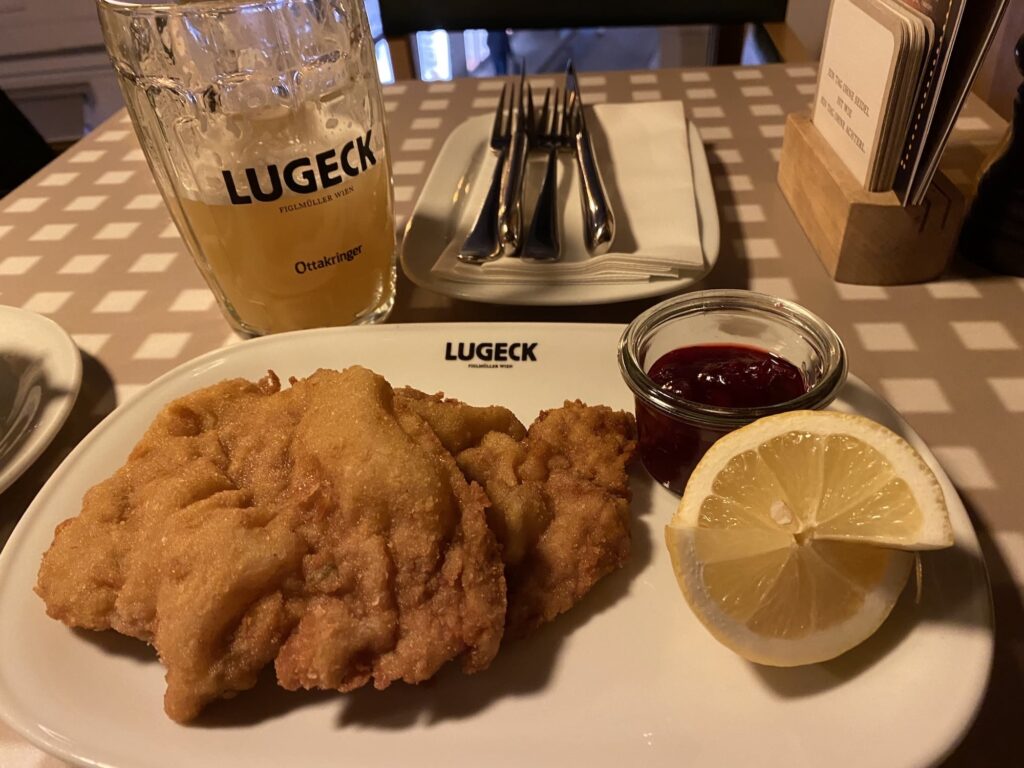
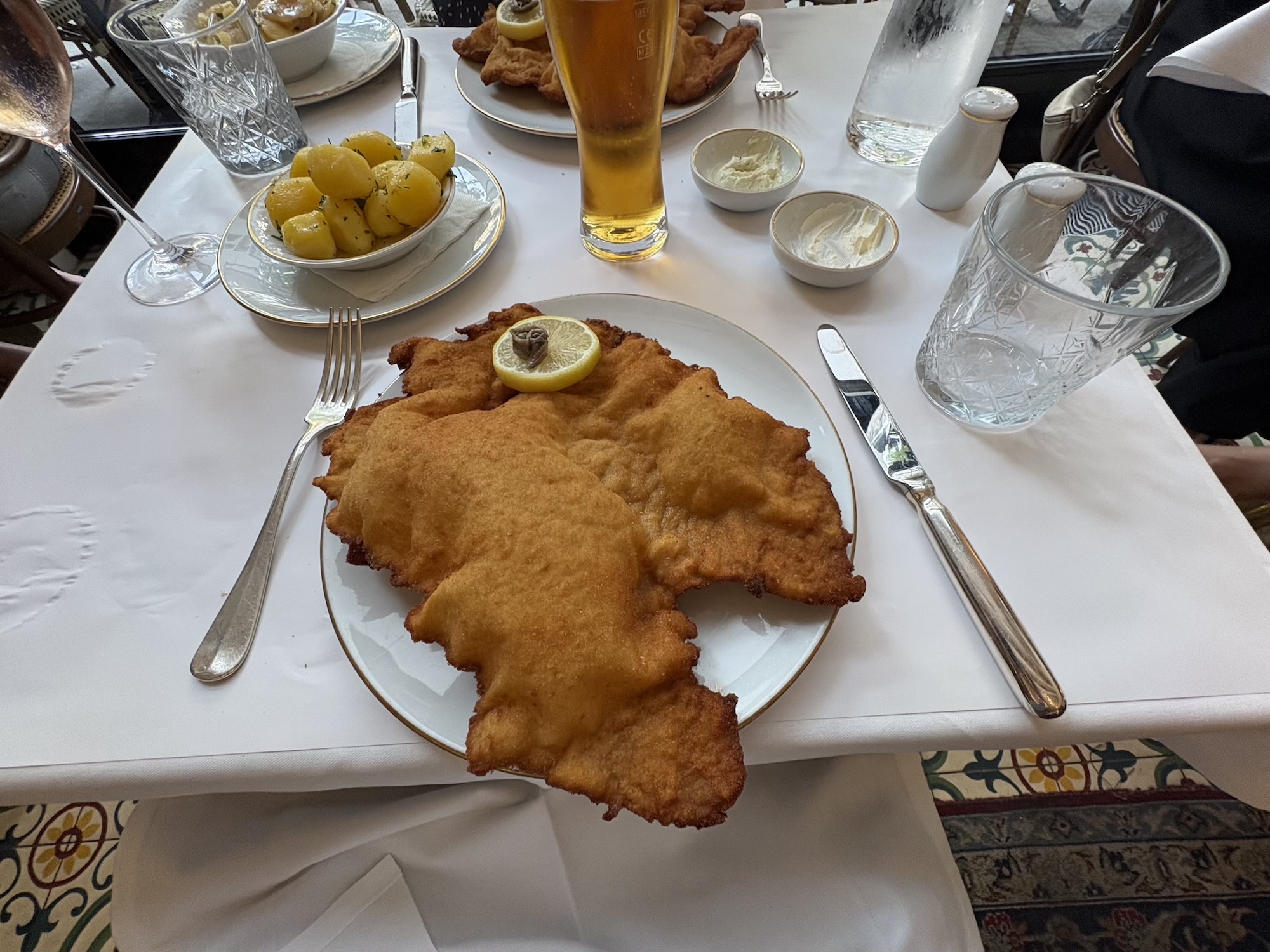
Think you know what comes with a schnitzel? If you’re imagining French fries and a scoop of applesauce—think again. In Vienna, that would be almost a culinary crime. A traditional Wiener Schnitzel is served with a wedge of lemon and, most importantly, a proper side dish.
The classic choice? Erdäpfelsalat—a delicate, slightly tangy Austrian potato salad dressed with vinegar, oil, and a hint of mustard. Some places also serve it with Gurkensalat (cucumber salad), Vogerlsalat (lamb’s lettuce), or a small scoop of lingonberry jam for just a touch of sweetness.
And remember: the schnitzel should be made from veal, not pork. Anything else has to be labeled Schnitzel nach Wiener Art. You’ll spot the difference—and taste it.
And if you spot someone pouring Kernöl (Styrian pumpkin seed oil) over their schnitzel—don’t be alarmed. It’s not traditional, but as one Viennese waiter once joked:
“If it exists, someone in Austria has tried it with Kernöl—probably twice.”
Traditionally, Kernöl is drizzled over salads—especially Styrian Vogerlsalat—or served with vanilla ice cream for a nutty twist. It’s dark, aromatic, and so treasured in Styria that locals call it “green gold.”
Bonus: What these facts tell you about Vienna
Vienna is a city of contrasts—elegant but dry-witted, historic yet full of surprises. These quirky facts aren’t just trivia; they reflect the soul of the city itself.
To truly understand Vienna, you need to grasp something locals call the Wiener Schmäh—a uniquely Viennese mix of charm, sarcasm, and a touch of world-weariness. It’s not quite a joke, not quite an insult, and always delivered with a twinkle in the eye. Whether it’s a waiter who calls you “Herr Professor” while rolling his eyes, or a shopkeeper muttering “Na eh klar” when you state the obvious—that’s Schmäh in action.
It’s how the Viennese navigate life: with style, a bit of irony, and the unshakable belief that things were probably better in the good old days, but a good coffee and a sharp comment still make everything bearable.
So as you wander the city, don’t just look for monuments. Listen to how people talk. Pay attention to the attitude behind the politeness. That’s where you’ll find the real Vienna.