
Yes. Vienna is a safe city to visit.
You do not need to spend your holiday looking over your shoulder, avoid the U-Bahn after sunset or hide your wallet in your underwear. Normal big-city common sense is enough.
Daniela and I spend a lot of time in Vienna. We regularly walk through the city at night and travel with cameras, laptops and other equipment that we would rather not donate to a stranger. We have never felt unsafe here. That is our personal experience, of course, not a guarantee that absolutely nothing can happen.
The main risk for visitors is petty theft in crowded places. You may also encounter drunk or noisy people on public transport late at night. Annoying? Occasionally. A reason to cancel your trip? Absolutely not.
How safe is Vienna in 2026?

Austria is currently listed as Level 1: Exercise Normal Precautions by the US Department of State. That is the lowest advisory level. The British government’s travel advice does not advise against travelling to Austria, either.
That matches what Vienna feels like on the ground. The centre is busy until late, public transport is widely used at night, and most neighbourhoods are perfectly comfortable to walk through.
Does that make Vienna crime-free? No. This is a city of almost two million people, not a heavily guarded open-air museum with Sachertorte.
Pickpockets and petty crime
Pickpocketing is the problem tourists are most likely to encounter. Be a little more attentive at:
- Stephansplatz and around St Stephen’s Cathedral;
- crowded U-Bahn trains and trams;
- Hauptbahnhof and Westbahnhof;
- Christmas markets and other busy events;
- escalators, ticket machines and queues.
Keep your phone and wallet out of open coat pockets and close your bag properly. Pay particular attention when boarding a crowded train. That is when people are distracted and a pickpocket does not need an engraved invitation.
There is no need to carry large amounts of cash. Cards are widely accepted, although Vienna still has a slightly old-fashioned love affair with cash. If you use an ATM, choose one attached to a bank and decline any unnecessary currency conversion offered by the machine.
Aggressive street scams are not a major feature of Vienna. You may occasionally encounter fake petition collectors or people asking for donations in busy tourist areas. A firm “no, thank you” is enough. You are under no obligation t
Are there unsafe areas in Vienna?
Vienna does not have tourist no-go zones. You can book a hotel outside the historic centre without accidentally ending up in a Viennese version of the Wild West.
Some places feel less polished late at night. Around Praterstern, parts of the Gürtel and a few large transport hubs, you may see intoxicated people or groups hanging around. Karlsplatz can also feel different at 1 am than it does on a sunny afternoon. That does not automatically make these places dangerous, but it is sensible to remain aware of what is happening around you.
If a street or situation does not feel right, take the obvious option: move away, enter a shop or hotel, or take public transport. There is no medal for stubbornly continuing down an empty alley because a travel blog told you Vienna was safe.
Terrorism and public safety
No European capital can promise zero risk of terrorism, and Vienna is no exception. Austria suffered a terrorist attack in Vienna in November 2020. Since then, security is more visible around major events, government buildings and places of worship when authorities consider it necessary.
For visitors, there is no general reason to avoid Vienna. Follow official instructions if an incident occurs and check current government travel advice before departure. Austria is neutral and is not a member of NATO. That may sound reassuring, but neutrality is a foreign-policy position, not an invisible security shield.
In 2019, the US Embassy even made an unusual agreement with McDonald’s Austria: Americans in distress could visit any Austrian branch and ask staff to connect them to the embassy. A genuine “McEmbassy” service — although emergency passports were never available with fries.
Public transport and getting around safely
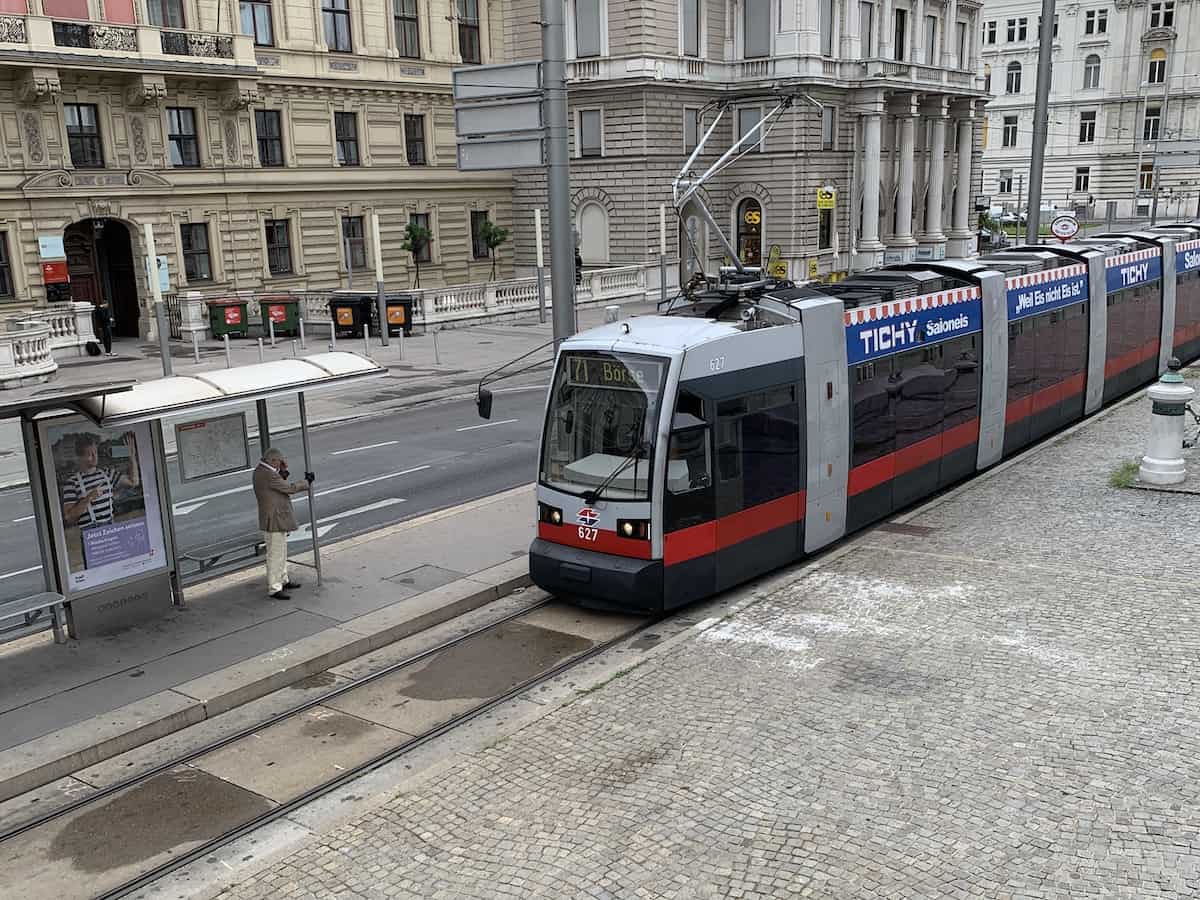
Yes. Vienna’s U-Bahn, trams and buses are among the easiest ways to get around, including after dark. We use them ourselves and would not hesitate to do so with expensive camera equipment.
On Friday and Saturday nights, you may share a carriage with people who have had a very enthusiastic evening. Most are harmless; not all are blessed with an indoor voice. If someone makes you uncomfortable, move to another carriage or wait for the next service.
The bigger financial risk is travelling without the correct ticket. Vienna has no entry gates, but inspectors carry out random checks and the fine is considerably more memorable than the price of a ticket. Buy before travelling and validate a paper ticket when required. Our guide to public transport in Vienna explains how it works.
Is Vienna safe for solo and female travellers?
Vienna is a good destination for solo travellers, including women travelling alone. Eating alone, returning to a hotel by public transport and walking through central areas in the evening are all normal here.
The usual precautions still apply. Do not leave a drink unattended, avoid very quiet parks late at night and do not follow a stranger somewhere because they claim to know a “secret local bar”. Vienna has plenty of excellent bars that are perfectly capable of appearing on Google Maps.
If you feel uncomfortable on the way back to your accommodation, take a licensed taxi or use a recognised taxi app. And if someone is bothering you, do not worry about being polite. A clear no works in German and English.
Demonstrations and political gatherings
Demonstrations regularly take place around Parliament, Heldenplatz and the Ringstrasse. Most are peaceful and well policed. They are more likely to disrupt your tram than your personal safety.
If you encounter a protest, give it some space and follow police instructions. Avoid joining a crowd simply to find out what everyone is shouting about. Road closures and diversions are usually the most relevant consequence for visitors.
Medical help and emergency numbers
Vienna has modern hospitals, pharmacies and emergency services. English is commonly spoken in larger hospitals and clinics, although it is not something every individual employee is legally required to perform on demand.
Save these numbers:
- 112 – European emergency number;
- 133 – police;
- 144 – ambulance;
- 122 – fire brigade;
- 1450 – health advice for urgent but non-life-threatening medical questions;
- 1455 – pharmacy service.
Calls to the main emergency numbers are free. The official Austrian government maintains the complete list of emergency numbers.
Pharmacies are easy to find, but they are not all open around the clock. Outside normal opening hours, an on-duty pharmacy serves the area and may charge an additional night-service fee.
Travelling with medication
Keep prescription medication in its original packaging and bring a copy of the prescription or a doctor’s letter, particularly for controlled medication. Do not assume that the same brand or dosage is available over the counter in Austria. A pharmacist can advise you, but cannot rewrite the laws because you forgot the paperwork.
Buying medication in Vienna
In Austria, medication is largely a pharmacy-only affair. You cannot simply add a packet of paracetamol or ibuprofen to your shopping basket at the supermarket or drugstore. Even these basic painkillers are only available from an Apotheke.
You normally do not need a prescription for standard over-the-counter medication, but you do need to visit a pharmacy. And yes, that pharmacy-only system also comes with a price tag. A simple packet of painkillers can cost considerably more than you may be used to at home.
If you regularly use basic medication, bringing a sensible amount with you can save both time and money. Otherwise, look for the green pharmacy cross — preferably before your headache starts on a Sunday evening.
LGBTQ+ safety and inclusivity

Vienna is generally welcoming to LGBTQ+ travellers. Same-sex couples are unlikely to attract attention in central and tourist areas, and the city has an established queer scene, with events including Vienna Pride and the Rainbow Ball.
No city is entirely free from prejudice, but Vienna is not a destination where LGBTQ+ visitors generally need to hide who they are. You can find venues, events and practical information on our dedicated LGBTQ+ guide to Vienna.
Our honest verdict
Vienna is one of those cities where you quickly stop thinking about safety. That is probably the best compliment we can give it.
We take the U-Bahn at night, carry our camera equipment through the centre and walk back after dinner without planning a tactical escape route. We still zip up our bags in crowded places and pay attention at stations. Safe does not mean switching off your brain.
So, should safety concerns stop you from visiting Vienna? No. Book the trip, use normal common sense and spend your time worrying about more important Viennese problems — such as whether one slice of cake is enough.
Last checked: August 2026. Travel advice can change, so check the official guidance for your country shortly before departure.