
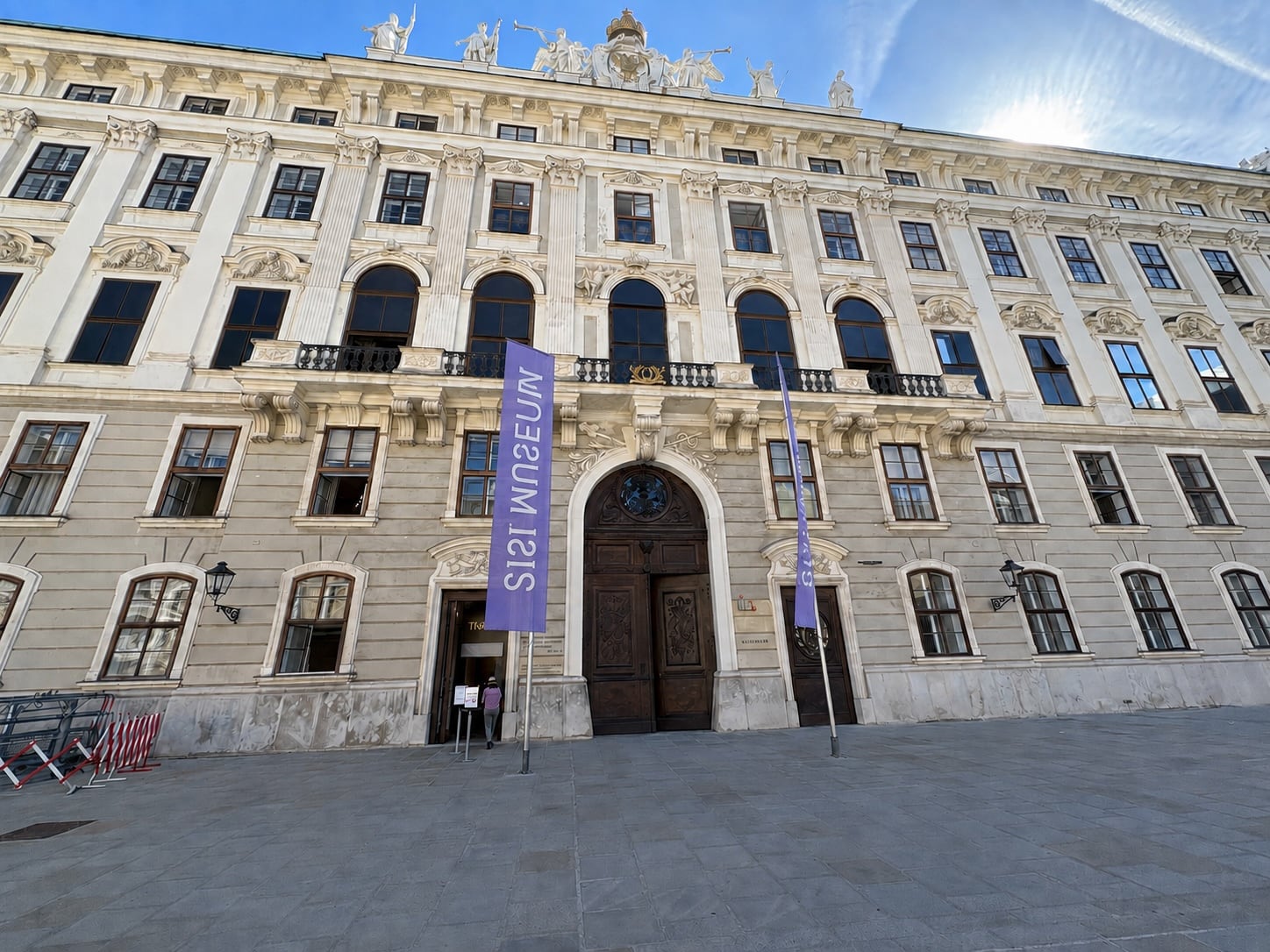
| Opening hours | Daily 9:00–17:30 · July & August until 18:00 · Last entry 1 hour before closing |
| Tickets | Adult €20 · Child (6–18) €12 · Student (19–25) €18 · Under 6 free |
| Address | Michaelerplatz 1, 1010 Vienna (Hofburg) |
| Transit | U3 Herrengasse (2 min walk) · Tram 1 / 2 / D — Burgring |
| Website | hofburg-wien.at |
Temporary changes until 18 November 2026
The Sisi Museum is in the final phase of its renovation. The museum section is closed, but the Imperial Apartments remain open to visitors.
- Opening hours: daily 10:00–16:30 (last admission 16:00)
- Tickets: 25% off the regular price during this period (not valid for the Sisi Pass)
The redesigned Sisi Museum opens on 19 November 2026. From then on, regular opening hours apply again: daily 9:00–17:30.
Free entry with the Vienna Pass
The Vienna Pass covers the Sisi Museum, the Imperial Apartments, and the Imperial Silver Collection — all three, no extra charge. If you’re planning to visit more than two or three attractions in Vienna, the math usually works out in your favor. The Vienna City Card gets you a reduced ticket at €18 instead of €20.
Let me be honest with you about Sisi
Growing up in Austria, Empress Elisabeth was simply everywhere. On chocolates, on magnets, in every souvenir shop from Innsbruck to Vienna. You learn her story before you can properly read — the beautiful empress, the tragic death, the eternal glamour. It takes a while before you start wondering whether that’s actually the whole story.
The Sisi Museum in the Hofburg is where you find out it isn’t. And that’s what makes it worth your time — not the dresses (though yes, the dresses are stunning), but the honest portrait underneath them. A woman who hated court life, wrote dark poetry, obsessed over her weight, and spent most of her reign trying to escape the role she’d been handed at sixteen. That story is far more interesting than the one on the chocolate boxes.
What you actually see
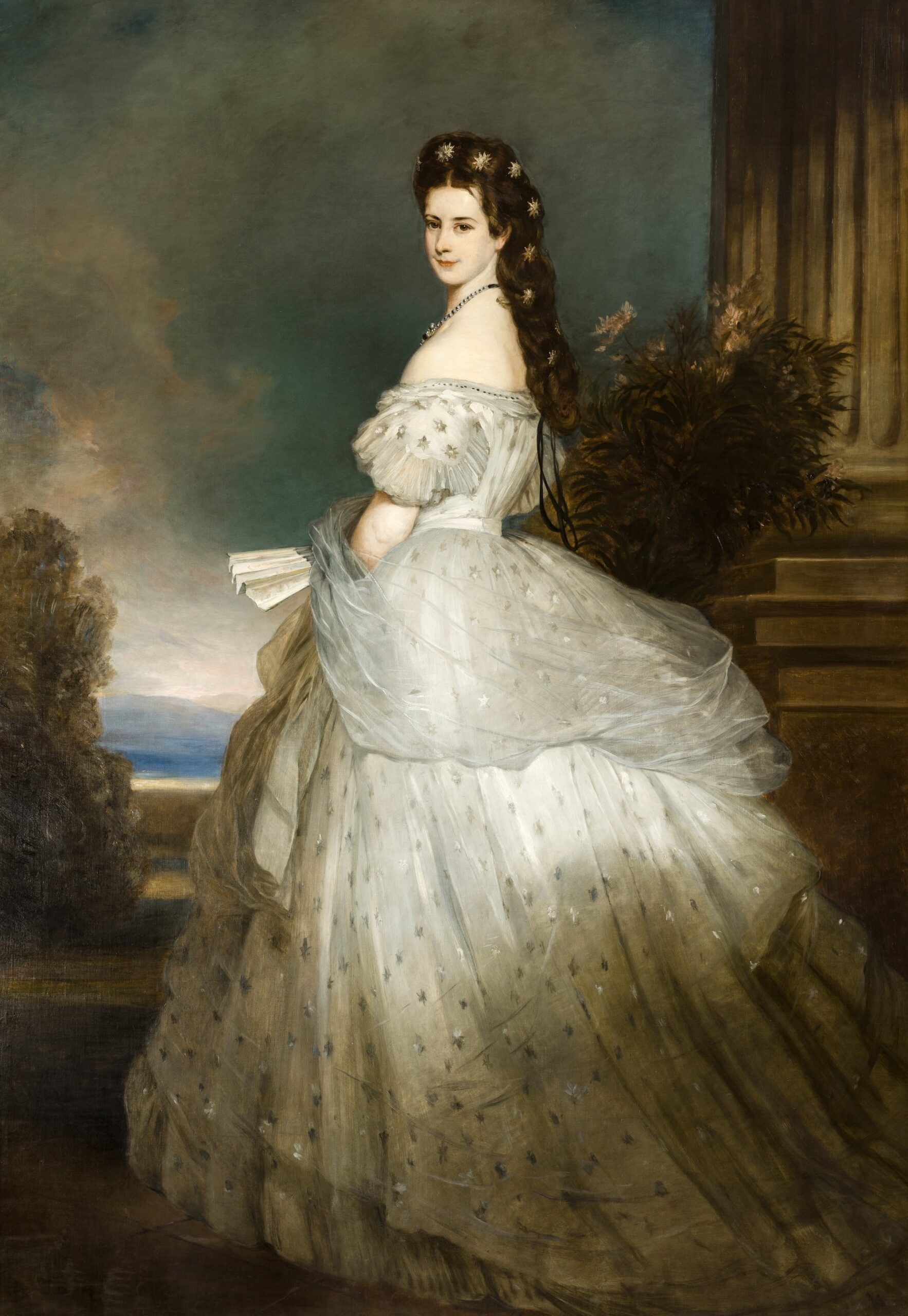
The museum opens with Elisabeth as a teenager — sixteen years old, newly married to Emperor Franz Joseph, suddenly thrust into one of the most rigid courts in Europe. The early rooms feel almost intimate: handwritten letters, personal objects, portraits that show a girl who clearly had no idea what she was walking into.
Then come the dresses. Yes, there are dresses. Gorgeous ones. But the curators are smart enough to put them in context: Elisabeth’s 50-centimeter waist wasn’t a sign of natural elegance — it was the result of a corset she never took off and a near-obsessive relationship with food and exercise that today we’d recognize immediately. She swam, fenced, rode horses for hours, and weighed herself every single day. The museum doesn’t sanitize any of this.
The rooms dedicated to her hair stars are a highlight — the originals are kept elsewhere, but the replicas are spectacular, and the story behind them (she spent two to three hours every morning having her hair done, and her hairdresser had to collect every fallen strand and present them for inspection) tells you everything about the impossible standards she was held to.
The tone shifts in the later rooms. After the death of her son Rudolf in 1889, Elisabeth wore black for the rest of her life. The dark cloak on display is a small object with enormous weight. The museum ends on her assassination in Geneva in 1898 — stabbed with a file by an anarchist who barely knew who she was. She walked onto the boat, collapsed, and was gone within minutes. It’s a bleak ending for a bleak story, and the museum doesn’t flinch from it.
Is the combo ticket worth it?
The standard ticket (€20 adult) includes the Sisi Museum, the Imperial Apartments, and the Imperial Silver Collection — all connected, all in the Hofburg. Plan on three hours total if you’re doing all three. The Silver Collection, which most people rush through, is genuinely strange and fascinating: 140,000 pieces of imperial tableware, including centerpieces so elaborate they needed their transport wagons. Worth slowing down for.
There’s also the Sisi Pass (€60 adult), which adds Schönbrunn Palace and includes an audioguide. If Schönbrunn is already on your list—and it should be—that’s a reasonable deal.
Practical information
Opening hours, Sisi Museum Vienna
The museum is open daily from 9:00 to 17:30. In July and August it stays open until 18:00. Last entry is one hour before closing. The museum is open year-round, including public holidays — check hofburg-wien.at for any exceptions.
Ticket prices (2026)
| Ticket | Standard | With guided tour |
|---|---|---|
| Adult | € 20.00 | € 25.00 |
| Child (0–5) | Free | Free |
| Child (6–18) | € 12.00 | € 17.00 |
| Student (19–25) | € 18.00 | € 23.00 |
| Vienna City Card | € 18.00 | € 23.00 |
| Vienna Pass | Free | Free |
| Sisi Pass (Sisi Museum + Schönbrunn + audioguide) | € 60.00 | — |
A standard ticket includes the Sisi Museum + Imperial Apartments + Imperial Silver Collection. Buy online to skip the ticket line.
Getting there
The Sisi Museum is inside the Hofburg, right in Vienna’s first district. Take metro line U3 to Herrengasse — it’s a two-minute walk from the exit. Trams 1, 2, and D stop at Burgring. Driving is not worth the headache; parking in the center is expensive and hard to find.
Frequently asked questions
What are the opening hours of the Sisi Museum in Vienna?
The Sisi Museum is open daily from 9:00 AM to 5:30 PM. In July and August it stays open until 6:00 PM. The last entry is one hour before closing. The museum is open year-round, including public holidays—check hofburg-wien.at for any exceptions.
How much does a Sisi Museum ticket cost?
The standard ticket covers the Sisi Museum, Imperial Apartments, and Imperial Silver Collection. Prices vary by age and pass — check hofburg-wien.at for current rates. Children under 6 are always free, and Vienna Pass holders get free entry.
Where is the Sisi Museum located in Vienna?
The Sisi Museum is inside the Hofburg at Michaelerplatz 1, 1010 Vienna. The easiest way to get there is by metro U3 (Herrengasse stop, 2-minute walk) or trams 1, 2, or D (Burgring stop). From St. Stephen’s Cathedral, it’s about a 10-minute walk.
How long does a visit to the Sisi Museum take?
Allow 1.5 to 2 hours for the Sisi Museum on its own. The standard ticket also includes the Imperial Apartments and the Imperial Silver Collection—for all three, plan on 3 hours total. The guided tour adds useful context and runs about 90 minutes.
Is the Vienna Pass worth it for the Sisi Museum?
If you’re visiting several attractions in Vienna, the Vienna Pass usually pays for itself. It covers the Sisi Museum, the Imperial Apartments, the Imperial Silver Collection, and dozens of other sights, plus unlimited public transit. If you’re only planning one or two museums, individual tickets are cheaper.
More museums in Vienna: All Vienna museums at a glance · Hofburg Palace: the complete visitor guide · Belvedere Museum Vienna · Is the Vienna Pass worth it?