
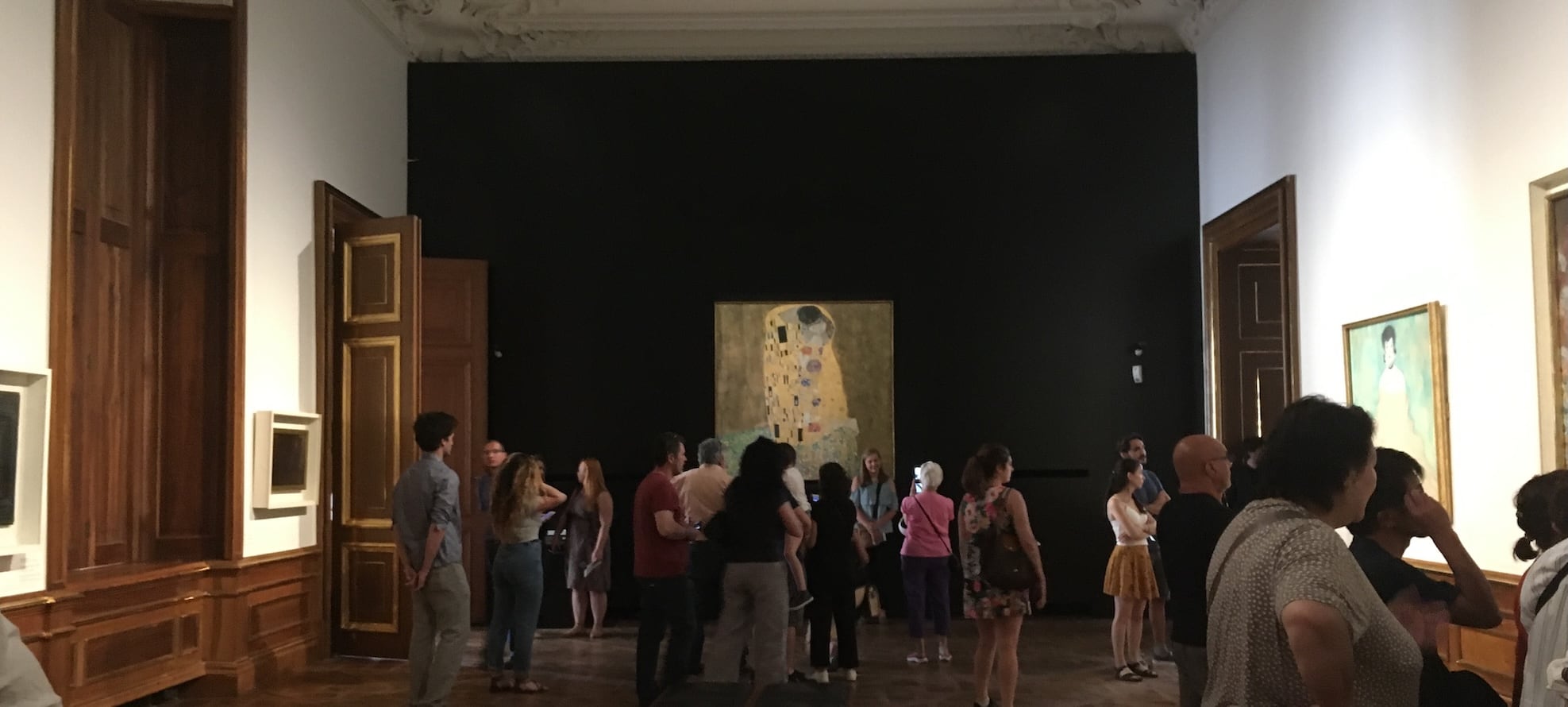
There’s a good chance you’ve already seen The Kiss hundreds of times before arriving in Vienna. It’s on postcards, magnets, tote bags, umbrellas and probably somewhere on your Instagram feed as well. Still, standing in front of the real painting inside the Upper Belvedere feels surprisingly different.
Part of that is the scale. People often expect a relatively small painting and are caught off guard by how dominant it actually feels in the room. The other thing photos never really capture is the gold. Klimt didn’t simply paint gold tones, he used actual gold leaf, and depending on the light and where you stand, the painting almost seems to glow.
For many visitors, seeing The Kiss by Gustav Klimt is one of the highlights of a trip to Vienna. The challenge is mostly navigating the surrounding crowds.
Where is The Kiss in Vienna?
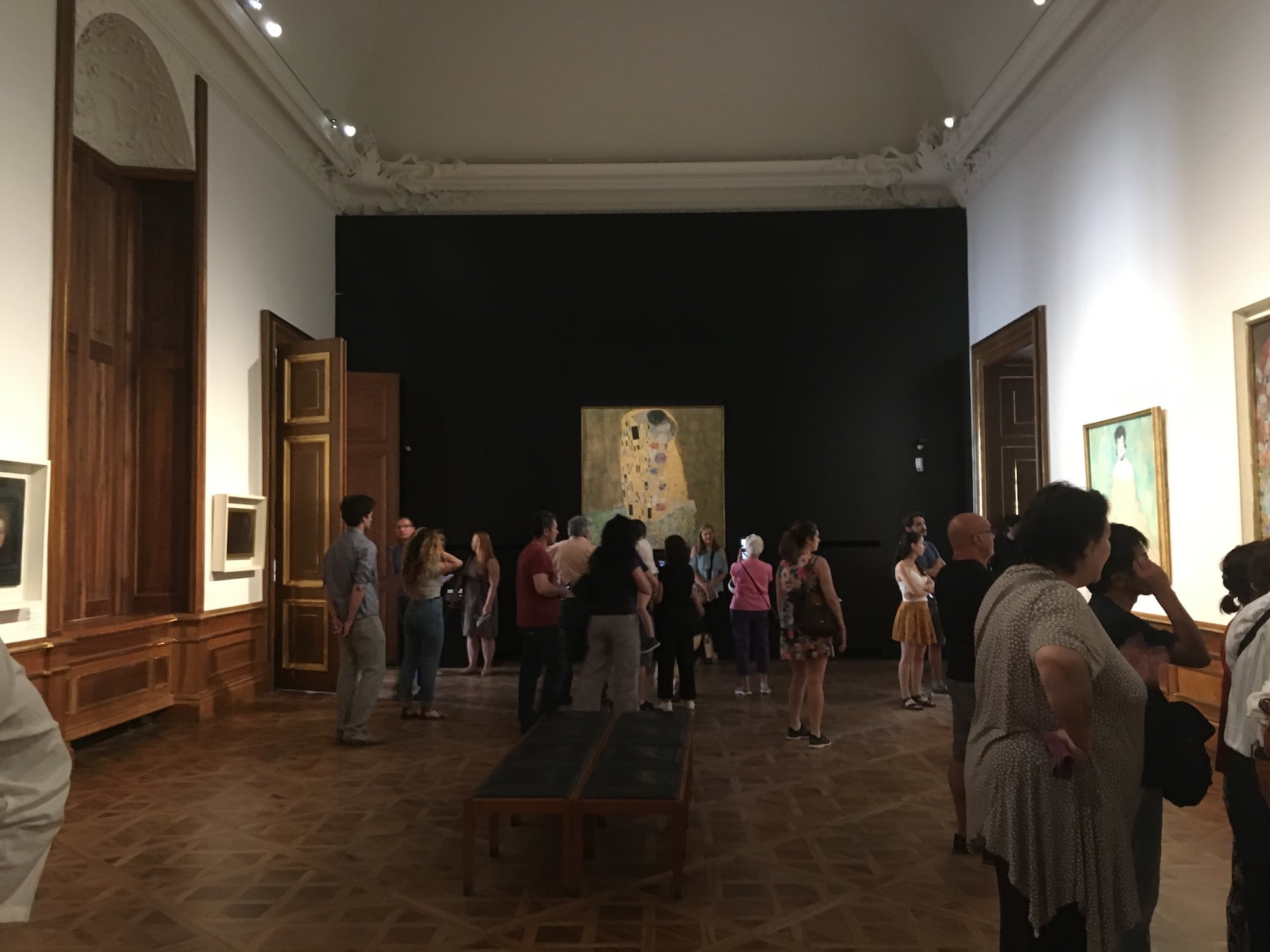
The painting hangs inside the Upper Belvedere, the large baroque palace south of the city centre. Not to be confused with the Lower Belvedere, which catches out more tourists than you might think.
Once inside the museum, most people move through the rooms at quite an impressive speed until they suddenly slow down in front of Klimt’s masterpiece. You’ll usually notice the room before you see the painting itself. There’s often a small crowd gathered around it, phones in the air and people quietly waiting for a better view.
Oddly enough, the atmosphere is usually calmer than you’d expect for one of the most photographed artworks in Europe.
More about the Belvedere palaces
Is it worth visiting just for this painting?
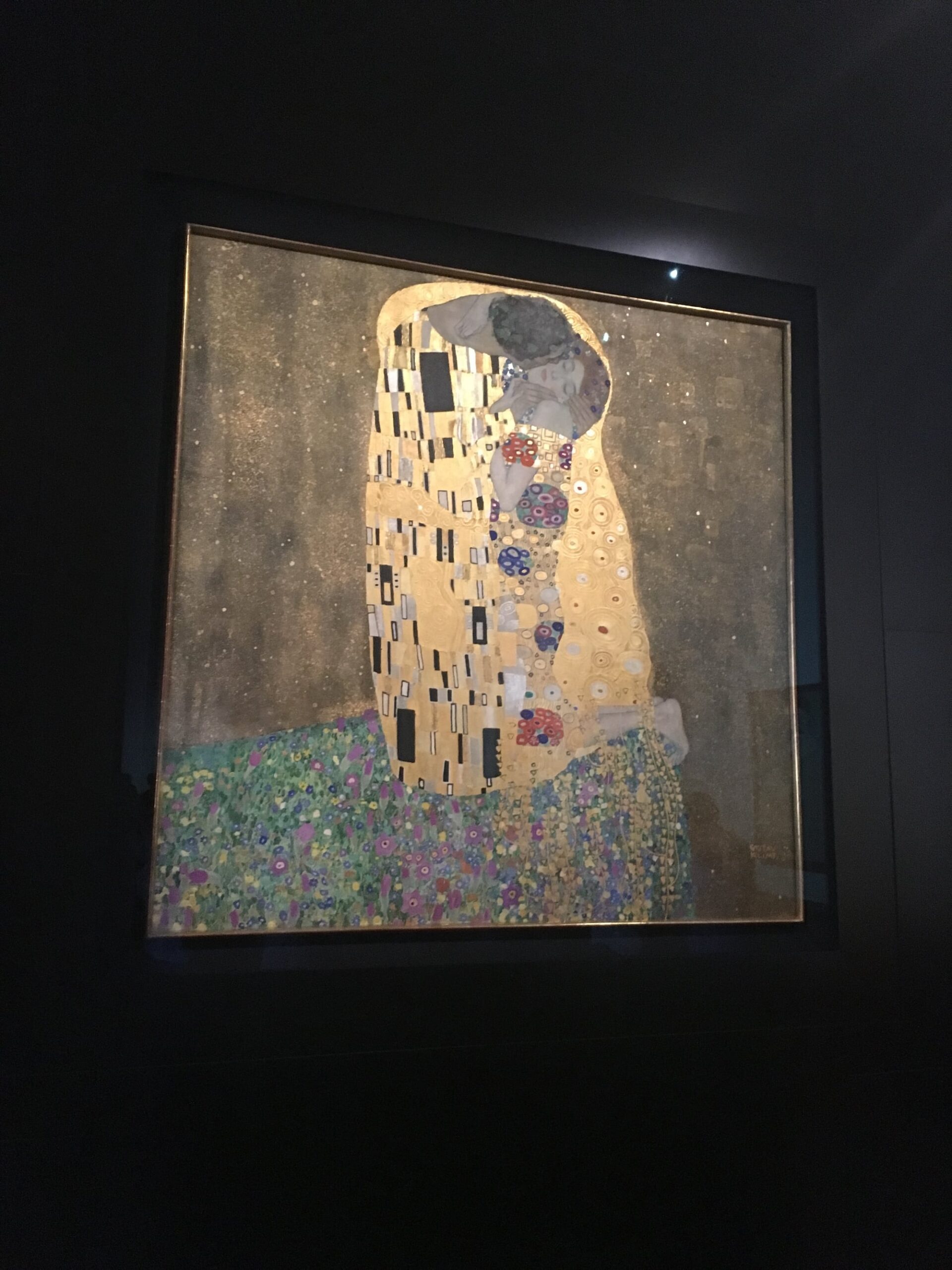
Honestly? Yes.
Even people who don’t normally spend hours in museums tend to connect with it. Maybe because Vienna still feels closely linked to Klimt and the world he lived in. You don’t really see The Kiss as an isolated artwork here. It becomes part of the whole atmosphere of the city: the Jugendstil architecture, the cafés, the Secession movement and that slightly dramatic Viennese obsession with beauty and melancholy.
The Belvedere itself also helps. You’re not walking into a modern white-box museum. You’re inside a former imperial palace with marble halls, ornate ceilings and views across Vienna.
That combination makes the experience feel bigger than simply “looking at a famous painting”.
Try to avoid the middle of the day
If there’s one practical tip that genuinely matters, it’s timing.
Late morning and early afternoon can become hectic, especially in summer. Tour groups arrive, the palace fills up quickly and the room around The Kiss can feel a bit rushed. You still see the painting of course, but it becomes harder to properly take it in.
We’ve found the museum much more enjoyable early in the morning or later in the afternoon. On grey or rainy days in Vienna, the atmosphere inside also feels noticeably calmer.
And strangely enough, winter can be one of the nicest periods to visit. Outside it’s cold and often gloomy, while inside the gold tones and warm palace interiors feel almost cosy.
Buy your Upper Belvedere tickets online to avoid the longest queues.
Don’t rush out too quickly
Many visitors walk straight to The Kiss, take a photo and leave twenty minutes later. That’s a shame because the rest of the museum is actually very good.
You’ll come across works by Egon Schiele, Oskar Kokoschka and other Austrian artists connected to Vienna around 1900. Even if you’re not deeply into art history, the collection gives you a better sense of why Vienna became such an important cultural city during that period.
The palace rooms themselves are also worth slowing down for. Some of the best moments are actually between the galleries, near the windows overlooking the gardens and the Vienna skyline.
The gardens are part of the experience
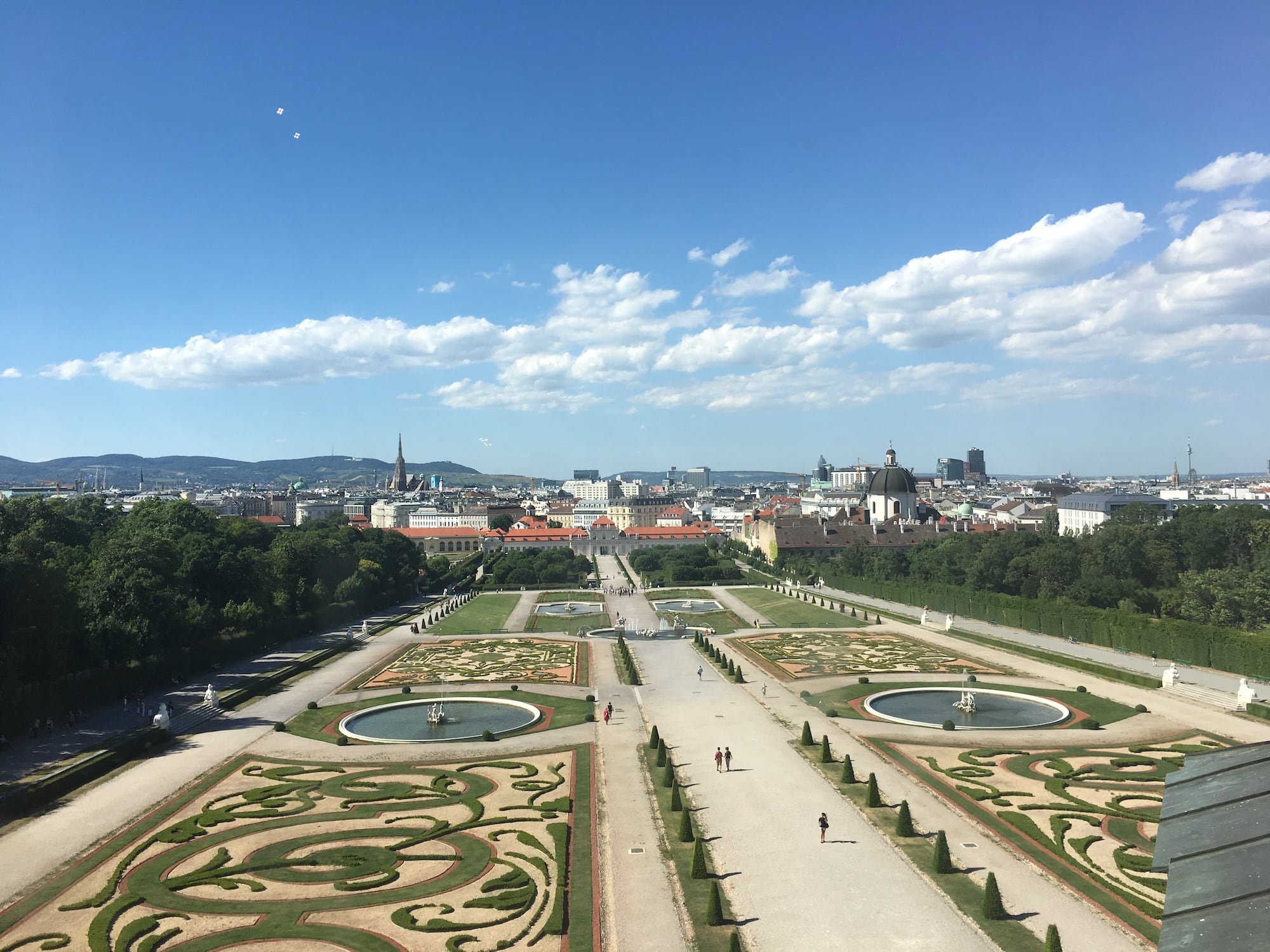
One thing many tourists skip completely are the Belvedere gardens.
After being inside the museum for a while, it’s worth walking slowly downhill through the formal gardens towards the city centre. Especially in spring and early summer, this part of Vienna feels surprisingly relaxed compared to the busy streets around Stephansplatz.
On sunny days you’ll see locals sitting on the grass, students reading books and tourists trying to line up the perfect photo of the palace fountains.
It’s one of those places where Vienna suddenly feels less like a capital city and more like a very liveable oversized town.
Getting there is easy
The Belvedere is well-connected and easy to reach from most parts of the city. If you’re staying near the Hauptbahnhof, you can simply walk there in around fifteen minutes.
Coming from the historic centre usually takes about ten minutes by tram.
And yes, you’ll probably end up taking far more photos of the building itself than you originally planned.
The part many visitors remember most
There are famous artworks that disappoint a little in real life because they’ve been overexposed online for years. The Kiss isn’t one of them.
Partly because of the painting itself, but also because Vienna still feels like the right setting for it. Seeing Klimt here makes sense in a way that reproductions elsewhere never quite manage.
So if you visit, don’t treat it like a quick checklist stop. Slow down a little, explore the palace beyond the famous room and take the walk through the gardens afterwards. That’s usually the part people remember most.
Where is The Kiss by Klimt in Vienna?
The Kiss is displayed inside Upper Belvedere in Vienna as part of the permanent collection.
Do you need tickets to see The Kiss?
Yes, you require an Upper Belvedere ticket. Booking online is recommended during busy periods. You can buy your tickets here.
What is the best time to visit The Kiss in Vienna?
Early mornings and late afternoons are usually quieter than the middle of the day.
How long do you need at Upper Belvedere?
Most visitors spend between 1.5 and 2 hours at the museum and palace.
Can you take photos of The Kiss?
Photography is usually allowed without flash, although rules may change during temporary exhibitions.