The Hofburg Vienna: not one palace, but six things to visit — and one plan you need first
Most visitors to Vienna put the Hofburg on their list without realising what they’ve signed up for. They expect a palace with a single entrance and a single ticket. What they find instead is an enormous complex of buildings, courtyards, museums and institutions spread across the centre of the city — each with its own opening hours, its own admission price and its own character.
The Hofburg served as the seat of the Habsburg dynasty for more than six centuries. From the 13th century until the collapse of the Austro-Hungarian Empire in 1918, this was where emperors lived, ruled and held court. Today it houses everything from a world-class museum dedicated to Empress Elisabeth to a working equestrian institution that has been training horses since 1572.
Arriving without a plan means spending a lot of time standing in the wrong queue. This guide walks you through the six main things to do at the Hofburg, what each costs, how long each takes and — just as useful — which one to skip until November 2026.
What exactly is the Hofburg?
The Hofburg is not one building. It is a collection of palaces, wings, courtyards and institutions that grew organically over seven centuries as each Habsburg ruler added to what their predecessors had built. The result covers roughly 240,000 square metres in Vienna’s first district — making it one of the largest palace complexes in the world.
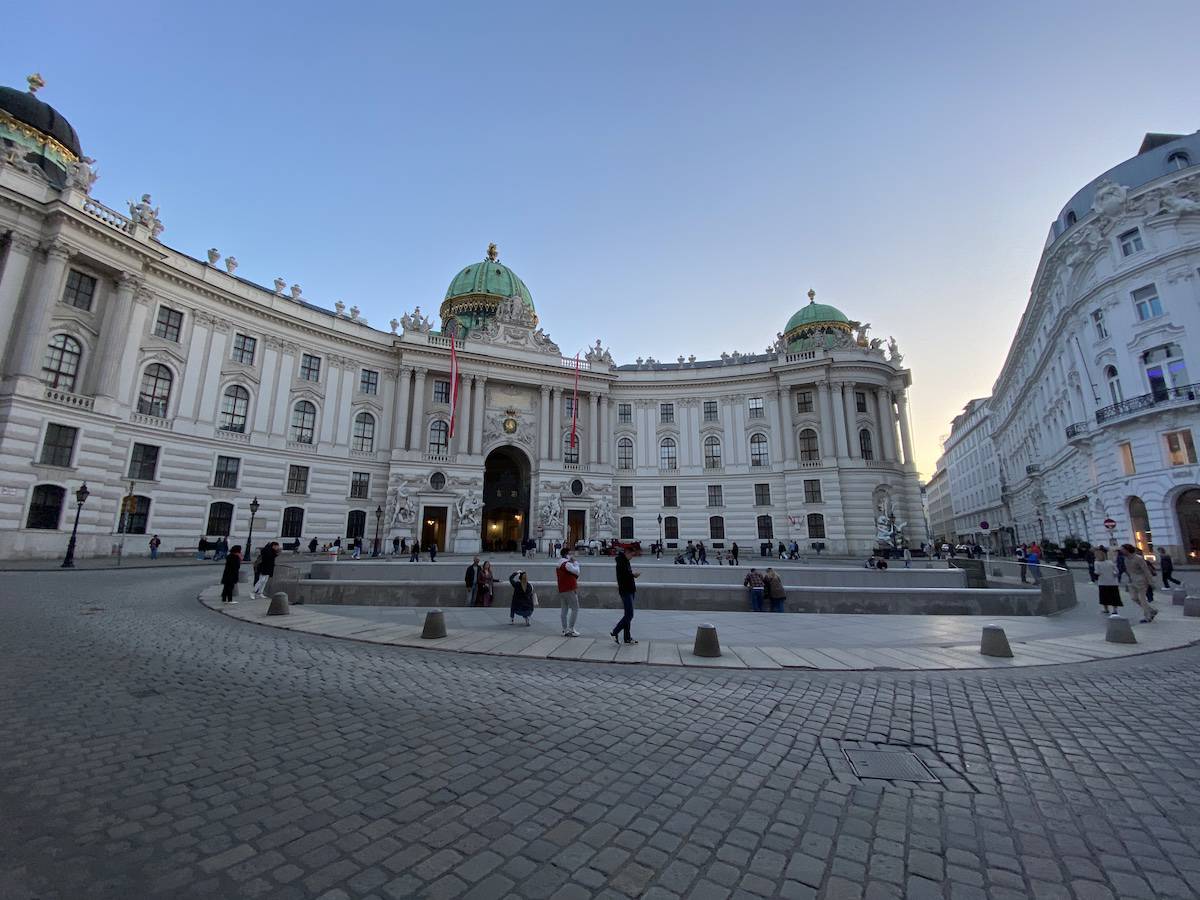
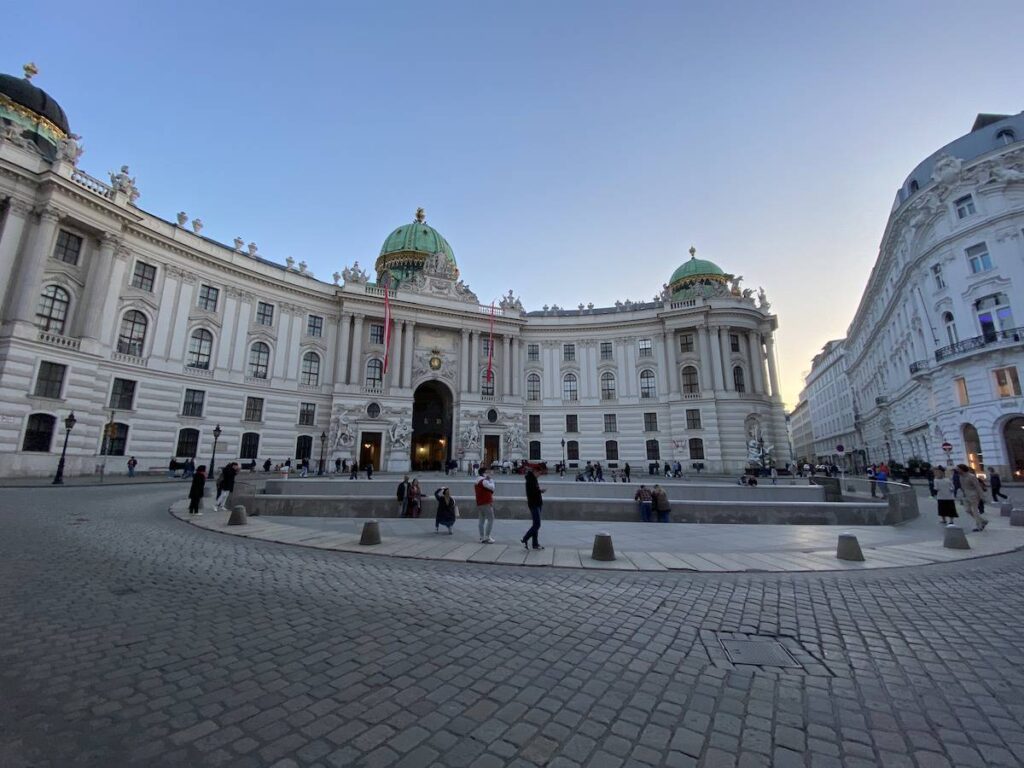
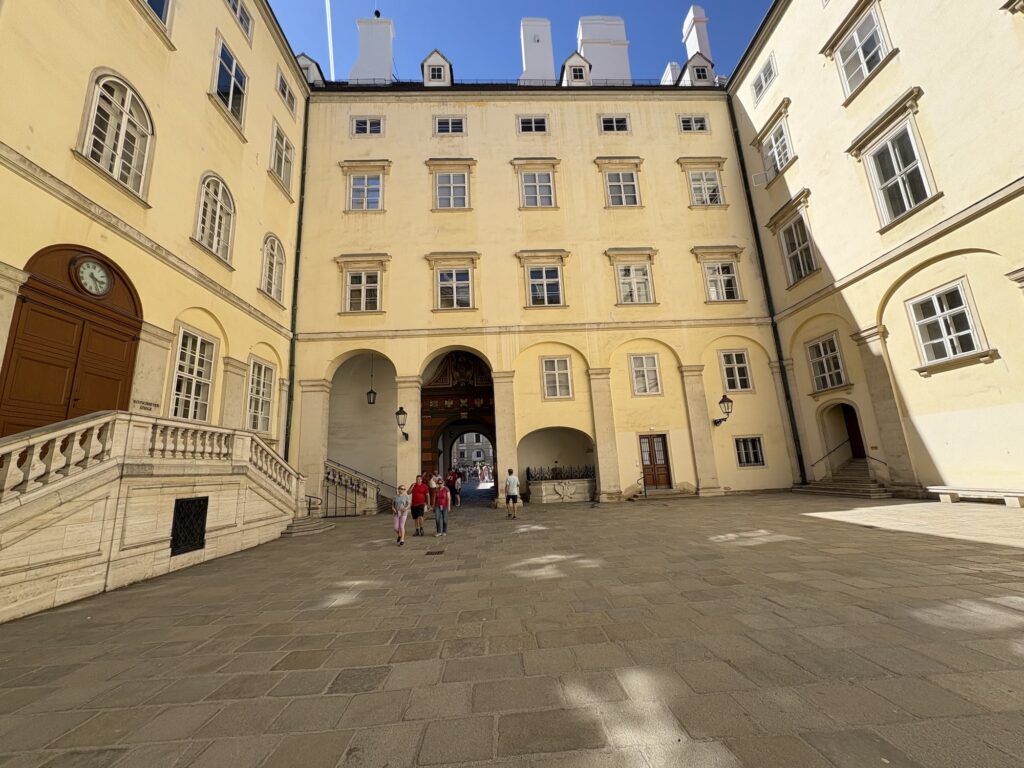
The most dramatic entrance is through Michaelerplatz, under the enormous domed archway (Michaelerkuppel) that leads into the inner courtyard. It’s hard to miss — and worth stopping at before you go in, because the square itself tells a small story. Directly opposite the palace gate stands the Looshaus, a building completed in 1912 by architect Adolf Loos with no ornamental façade whatsoever. Emperor Franz Joseph reportedly refused to look at it. According to Viennese legend, he had the curtains drawn in the palace rooms overlooking the square — the locals nicknamed the building das Haus ohne Augenbrauen, the house without eyebrows.
Inside the complex, the major attractions are spread across different wings. The inner courtyard (Innerer Burghof) and the grand Heldenplatz square are free to walk through. Everything else requires a ticket — and each attraction is ticketed separately.
Sisi Museum and Imperial Apartments
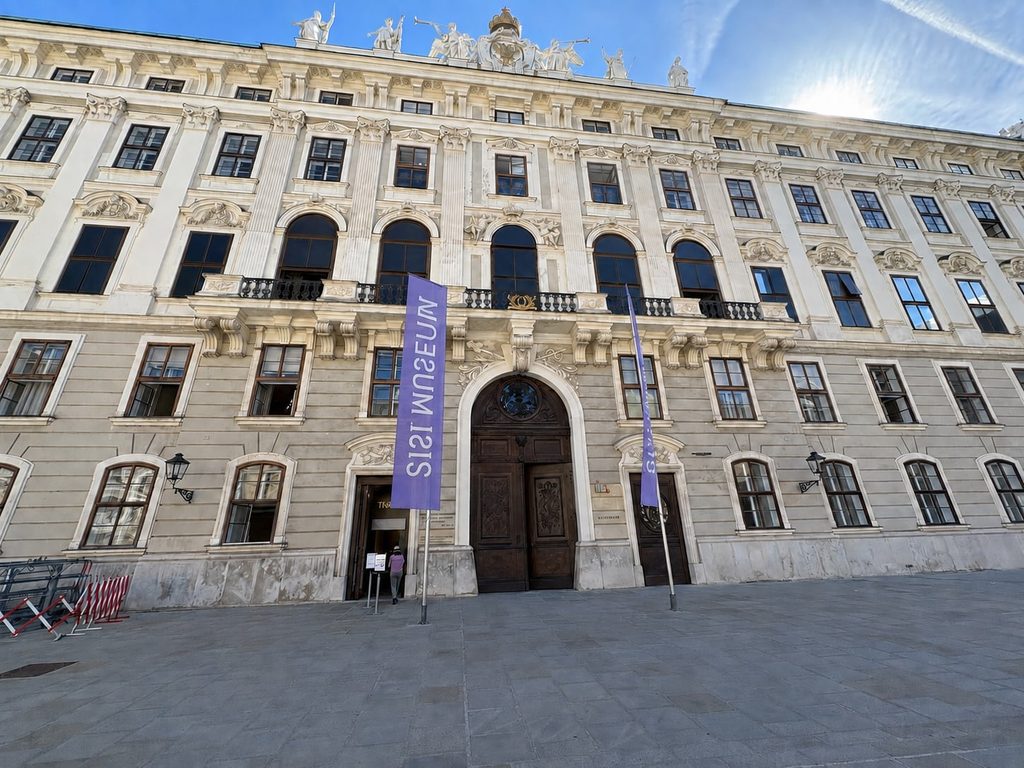
The Sisi Museum and the Imperial Apartments are the most visited part of the Hofburg, and for good reason. The combination gives you access to the private rooms where Emperor Franz Joseph and Empress Elisabeth actually lived—including their bedroom, study, and dressing room—alongside a dedicated museum exploring Elisabeth’s life, her obsession with her appearance, and her tragic assassination in Geneva in 1898.
What makes the Sisi Museum worth the visit is the level of personal detail. You see the gymnastic equipment she had installed in her apartments. You learn that she weighed herself daily and kept her waist at 50 centimeters for most of her adult life. The audioguide—available in 14 languages and included in the ticket—adds context that the rooms alone can’t provide.
One thing to know before you book: the Silver Collection (Silberkammer) is closed for renovation until November 2026. Under normal circumstances, one ticket covers all three areas—Sisi Museum, Imperial Apartments and Silver Collection. For now, you’re getting two of the three.
Practical details:
Open daily from 9:00 am to 5:30 pm (last entry 4:30 pm).
Adults €20 | Children (6–18) €12 | Students (19–25) €18 | Vienna City Card holders €18 | Under 6 free.
Timed-entry tickets—book online at imperialtickets.com to secure your slot and avoid queuing.
Address: Hofburg, Michaelerkuppel, 1010 Vienna.
Read more about the Sisi Museum
The Imperial Treasury (Schatzkammer)
If the Sisi Museum is the Hofburg’s busiest attraction, the Imperial Treasury — Kaiserliche Schatzkammer — is the most underrated. It sits in the same complex but draws a fraction of the crowds, and it contains objects that are genuinely hard to find anywhere else on earth.
The centrepiece is the Imperial Crown of the Holy Roman Empire, a late-10th-century crown covered in enamel plates depicting biblical scenes and encrusted with gemstones. It was used in coronation ceremonies for more than 800 years. In the same room hangs the Habsburg Crown of Austria, made for Emperor Rudolf II in 1602 — the crown that became the symbol of the Austrian Empire when the Holy Roman title dissolved in 1806. These are not replicas.
One of the more arresting objects in the collection is the Holy Lance (Room 8), a Roman cavalry lance believed by medieval emperors to be the spear used at the Crucifixion. Every Holy Roman Emperor from Otto I onward carried it into battle. Whether you find that historically interesting or historically strange, it’s an object that makes you stop.
A practical tip worth following: walk past Rooms 1 and 2 (ecclesiastical vestments) and head straight to Rooms 3–11, where the crowns, regalia and treasures are. Allow around 1.5 to 2 hours. Children under 19 get in free.
Practical details:
Open daily 9:00 am to 5:30 pm — closed on Tuesdays.
Adults €14 | Concessions €10 | Under 19 free.
Combined ticket with Spanish Riding School: €26.
Photography permitted without flash.
The Spanish Riding School
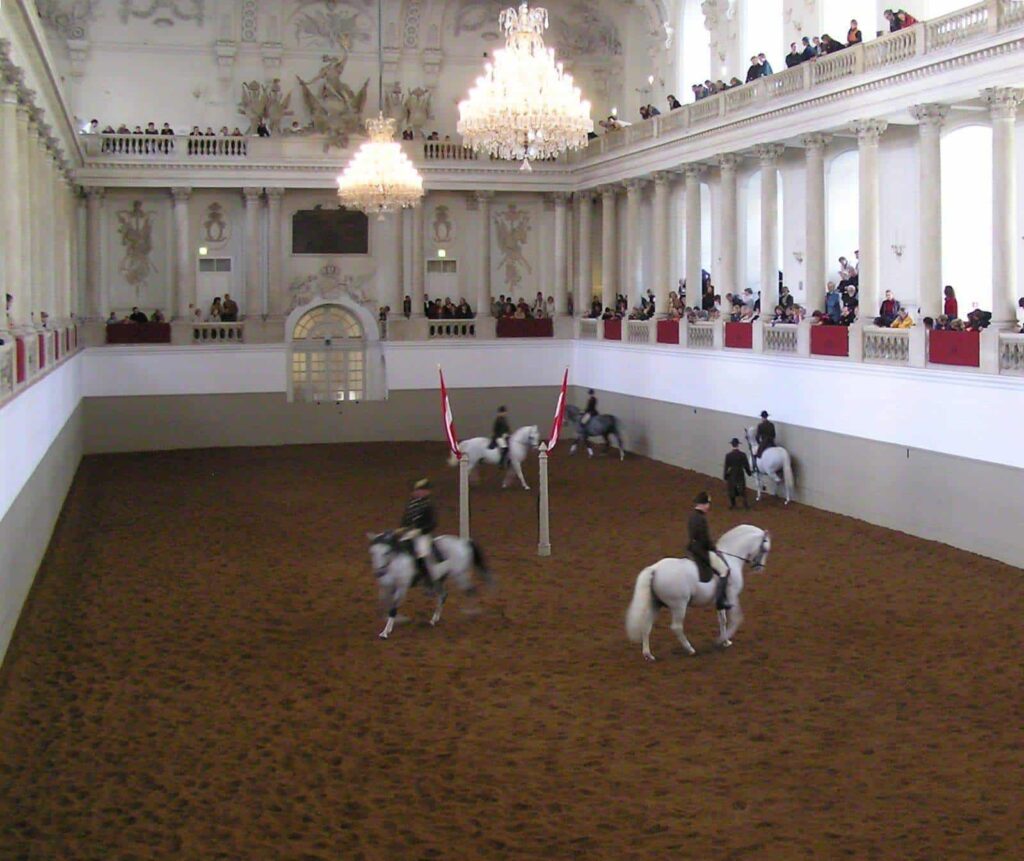
The Spanish Riding School — Spanische Hofreitschule — has been training horses in the same baroque Winter Riding School since 1729. The Lipizzaner stallions it is famous for take up to eight years to reach performance standards. A full performance, with the horses executing moves like the Levade (balanced on hindquarters) and the Capriole (a leap with a kick), is one of the more formally choreographed things you’ll see in Vienna.
Performances start from €26, but the better value — and the more honest look at what actually happens here — is a Morning Training session, from €17. You watch the horses and riders go through their daily workout in the same hall, without the music and ceremony of a performance. It’s less theatrical and more interesting, and the hall itself — all white and gold — is worth seeing regardless of what’s happening in it.
Guided tours of the school and its history start from €24. The Spanish Riding School is at Michaelerplatz 1, 1010 Vienna — book through srs.at, as performances sell out well in advance.
Read more about the Spanish Riding School
What you can explore for free
A significant part of the Hofburg costs nothing. The inner courtyards — including the Innerer Burghof and the sweeping Heldenplatz — are open to anyone. Heldenplatz is where you’ll find the equestrian statues of Archduke Charles and Prince Eugene of Savoy, and where, on 15 March 1938, Hitler announced the annexation of Austria to an estimated crowd of 200,000 people. The square still carries that weight.
Just behind the Hofburg, the Burggarten is one of Vienna’s quietest central parks and the home of the most photographed Mozart statue in the city — a golden figure that is, unavoidably, surrounded by people taking the same photograph at any time of day. It is still worth walking through, not least because the park is genuinely pleasant and free.
The Volksgarten, on the other side of the complex, is less visited and better for it. It has a small Greek-temple-style building (the Theseus Temple), a café and a rose garden that flowers from May through October. There’s also a seated statue of Empress Elisabeth, which tends to draw less of a crowd than the Mozart statue despite being, historically speaking, the more significant of the two for the Hofburg.
How to get to the Hofburg
The Hofburg sits in Vienna’s first district, within walking distance of most inner-city hotels. The most direct public transport options are:
- U3 Herrengasse — exits directly onto Herrengasse, a two-minute walk to Michaelerplatz
- U2 or U3 Volkstheater — five minutes on foot via the Volksgarten
- Trams 1, 2 or D — stop at Burgring, directly in front of the Heldenplatz entrance
Driving is not recommended. The first district has very limited parking, and most spots are restricted to two hours on weekdays. Public transport is faster and less frustrating.
Tips before you visit
Book the Sisi Museum online. Tickets are timed-entry, and popular slots fill up — especially in summer. Walk-up tickets exist but you may end up waiting or missing your preferred time.
The Treasury is closed on Tuesdays. It’s easy to miss this. If Tuesday is your only free day, the Sisi Museum is your best Hofburg option.
Don’t try to do everything in one day. The Sisi Museum alone takes 1.5 to 2 hours. Add the Treasury (1.5–2 hours) and a Spanish Riding School session (1–2 hours) and you have a full day with nothing left for anything else in Vienna. Most visitors find one or two attractions per day more enjoyable than a full sweep.
The Silver Collection is closed until November 2026. If you specifically want to see the imperial tableware and ceremonial silverware, come back after that date.
The Sisi Pass (€60 adults) combines the Sisi Museum, Schönbrunn Palace and the Vienna Furniture Museum with audioguides. If you plan to visit Schönbrunn anyway, the pass usually saves you money.
Frequently asked questions about the Hofburg Vienna
Is the Hofburg free to visit?
The outdoor areas — the courtyards, Heldenplatz, Burggarten and Volksgarten — are free. The Sisi Museum, Imperial Treasury, Spanish Riding School and other museums inside the complex all charge separate admission. There is no single Hofburg ticket.
How long does it take to visit the Hofburg?
That depends on what you visit. The Sisi Museum and Imperial Apartments take 1.5 to 2 hours. The Imperial Treasury takes 1.5 to 2 hours. A Spanish Riding School training session or performance adds another 1 to 2 hours. Trying to do all three in one day is possible but leaves little room for anything else.
What is the best part of the Hofburg to visit?
It depends what you’re after. The Sisi Museum is the most popular and gives the most personal view of the imperial family. The Imperial Treasury has the most historically significant objects — including the crown of the Holy Roman Empire — and is far less crowded. The Spanish Riding School is unlike anything else in Vienna.
Do I need to book Hofburg tickets in advance?
For the Sisi Museum and Imperial Apartments, yes — tickets are timed-entry and popular slots fill up, especially in summer. Book at imperialtickets.com. For the Spanish Riding School, book well in advance as performances sell out. The Imperial Treasury generally does not require advance booking.
Is the Imperial Treasury closed on certain days?
Yes — the Imperial Treasury (Schatzkammer) is closed every Tuesday. On all other days it is open from 9:00 am to 5:30 pm.
How do I get to the Hofburg by public transport?
The easiest option is the U3 to Herrengasse, which brings you out two minutes from the Michaelerplatz entrance. Trams 1, 2 and D stop at Burgring, right in front of Heldenplatz. From most central hotels, the Hofburg is also within walking distance.
Is the Hofburg worth visiting?
Yes — but go in knowing what you want to see. Visitors who arrive without a plan often end up overwhelmed by the size of the complex and disappointed that there’s no single entrance or ticket. Choose one or two attractions, book in advance and you’ll have a much better visit.