
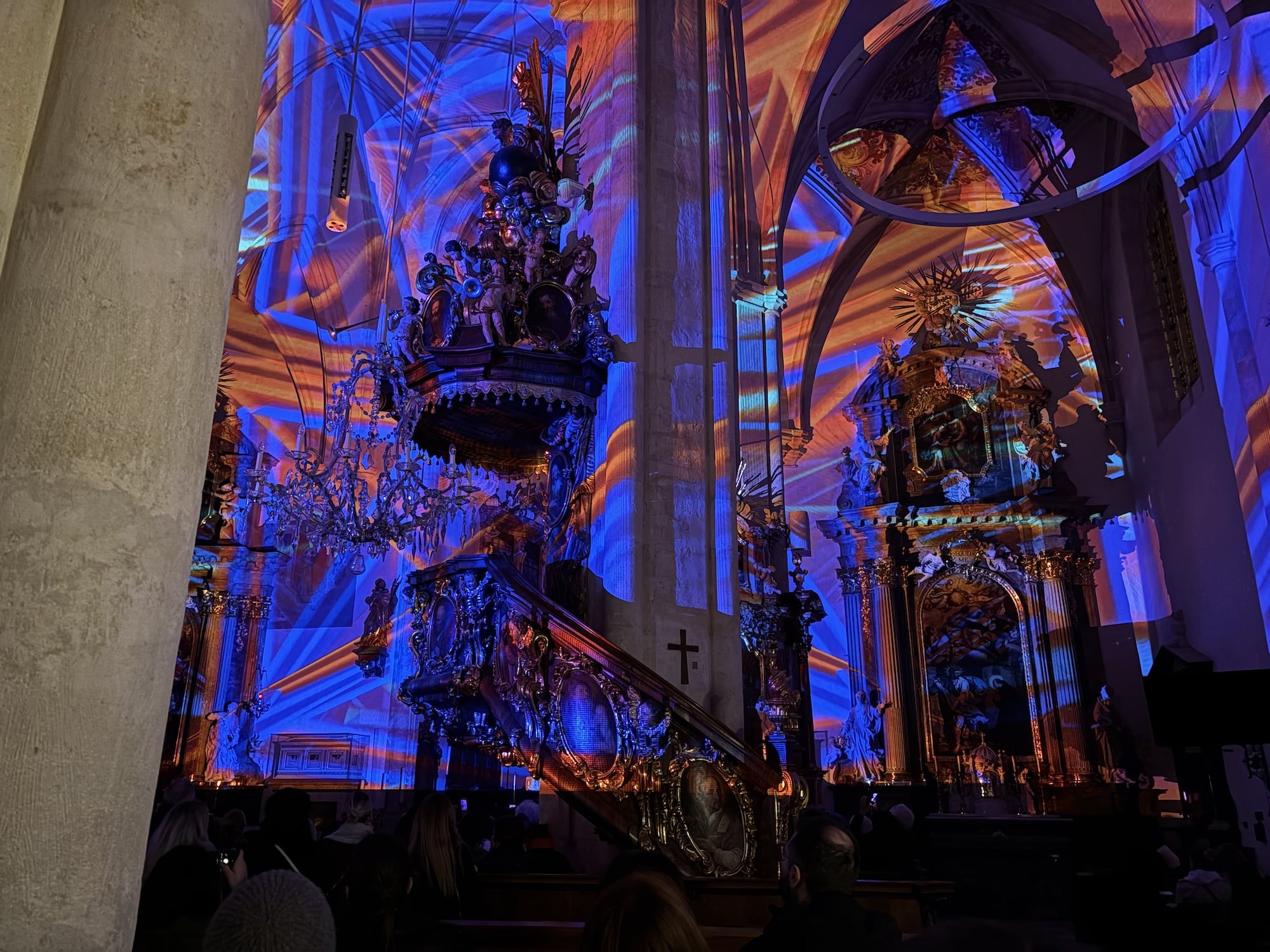
From 23 October 2026, Vienna has a new reason to go out after dark. At Klanglicht im Park – The Sound of Light, you walk through the Schwarzenberg Garden (Schwarzenberggarten) past installations that play with light, sound and the way you perceive them. A giant moon, beams of light that seem to follow you and shapes you can change yourself: there are plenty of reasons to stop along the way.
The first Vienna edition runs until 10 January 2027, so it works for an autumn weekend as well as a city break over Christmas and New Year. The venue is the historic garden next to the Belvedere, with its entrance on Prinz-Eugen-Strasse.
From Graz to Vienna
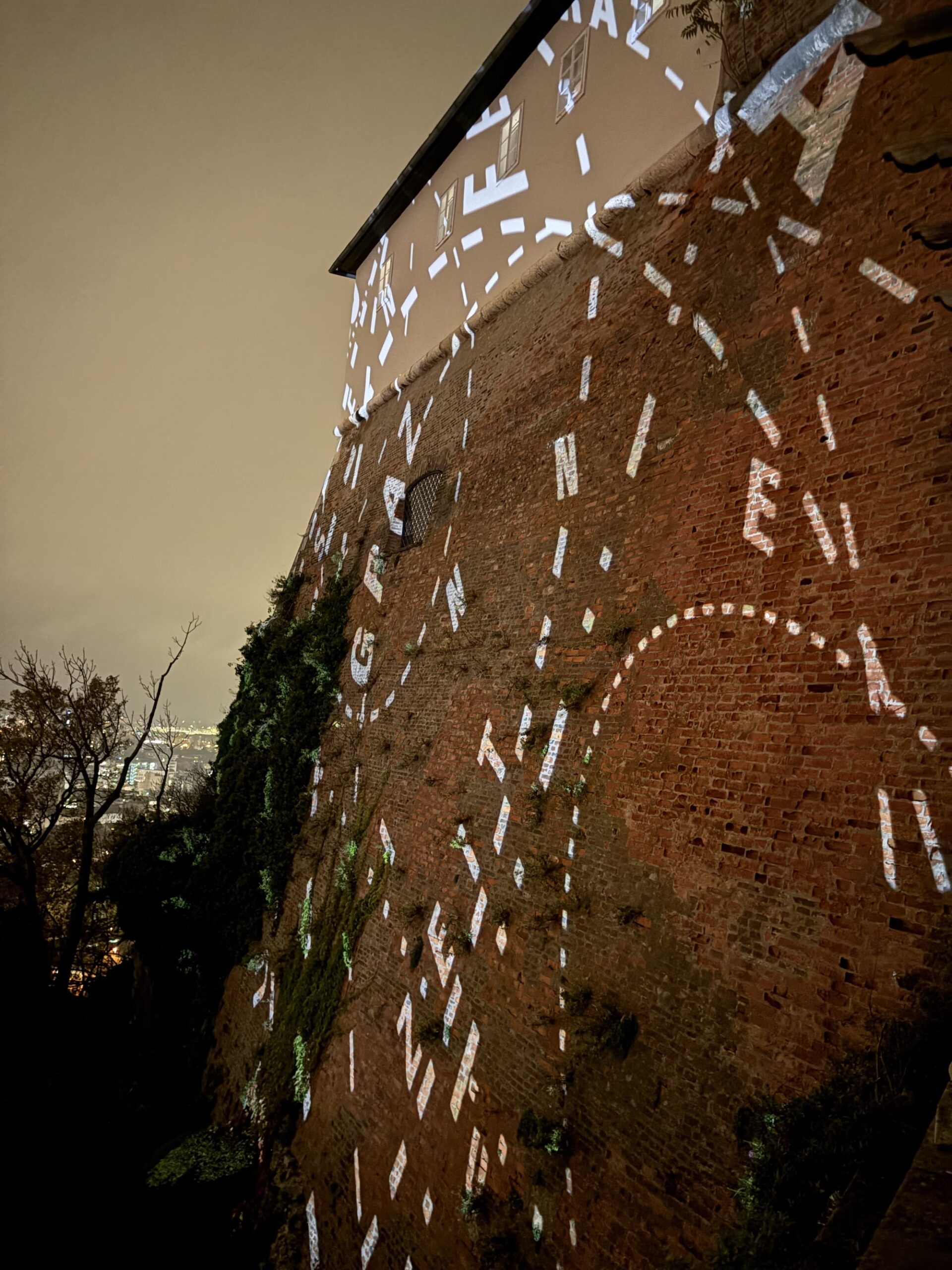
Klanglicht started in Graz in 2015, as an initiative of the city’s theatre company, Bühnen Graz. In autumn 2026 it expands to Vienna. Graz keeps its own festival too: both cities open their editions on 23 October.
In Vienna, the garden itself is the starting point. The artists respond to its trees, its layout and its history. The organisers want it to be a place where you slow down and look at your surroundings more closely.
That makes it a good evening out on a city break. You do not need to know anything about art to notice how a beam of light steers your gaze, or how a moving shape starts to remind you of something. Give yourself time to see what happens when you keep looking.
The Schwarzenberg Garden as part of the exhibition
The route leads through a garden of old trees, paths and four terraces, climbing from the area around Palais Schwarzenberg up towards the Belvedere. The different levels are part of the garden’s layout. You are walking between garden terraces, not up to a floor of the palace.
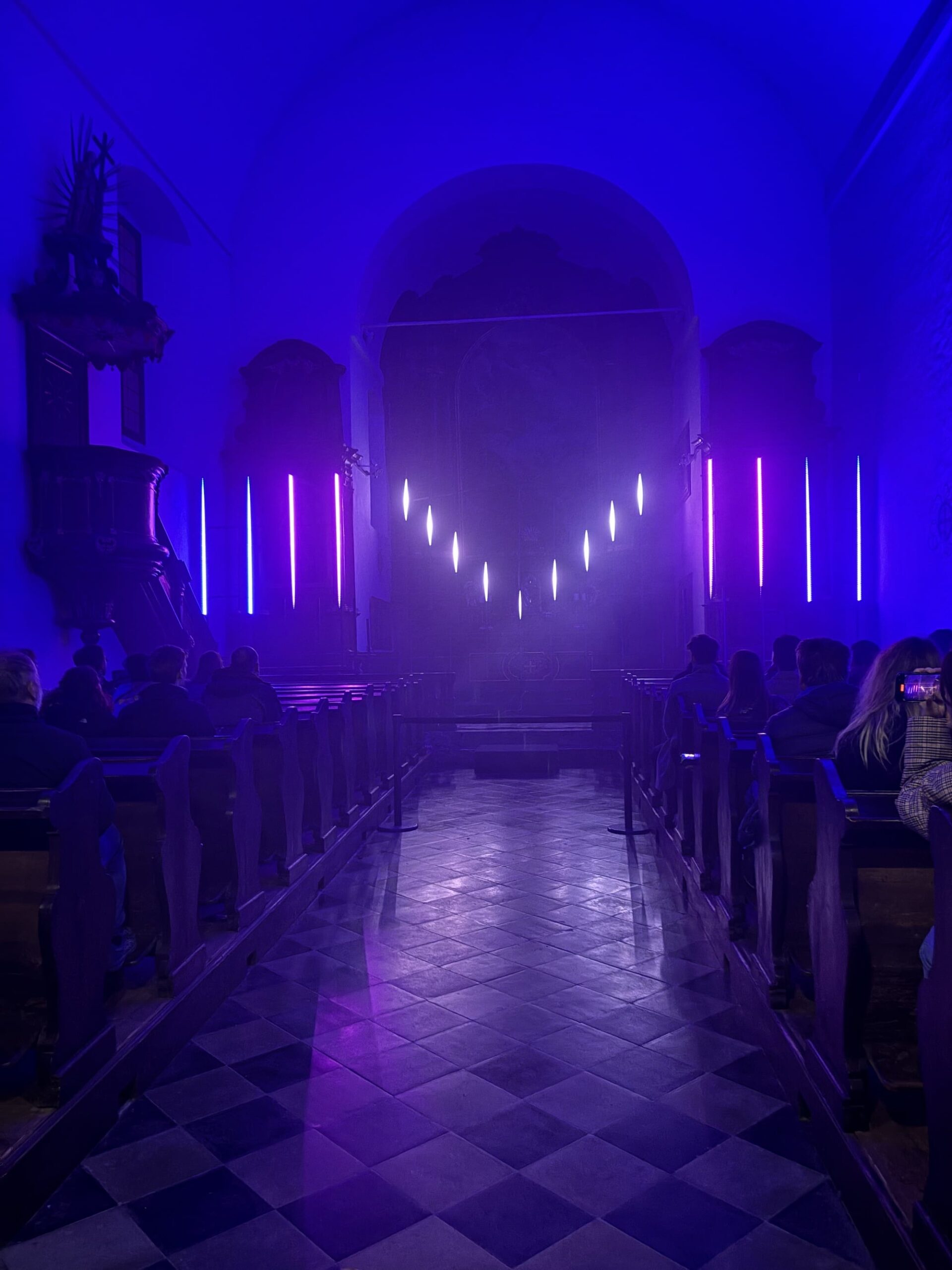
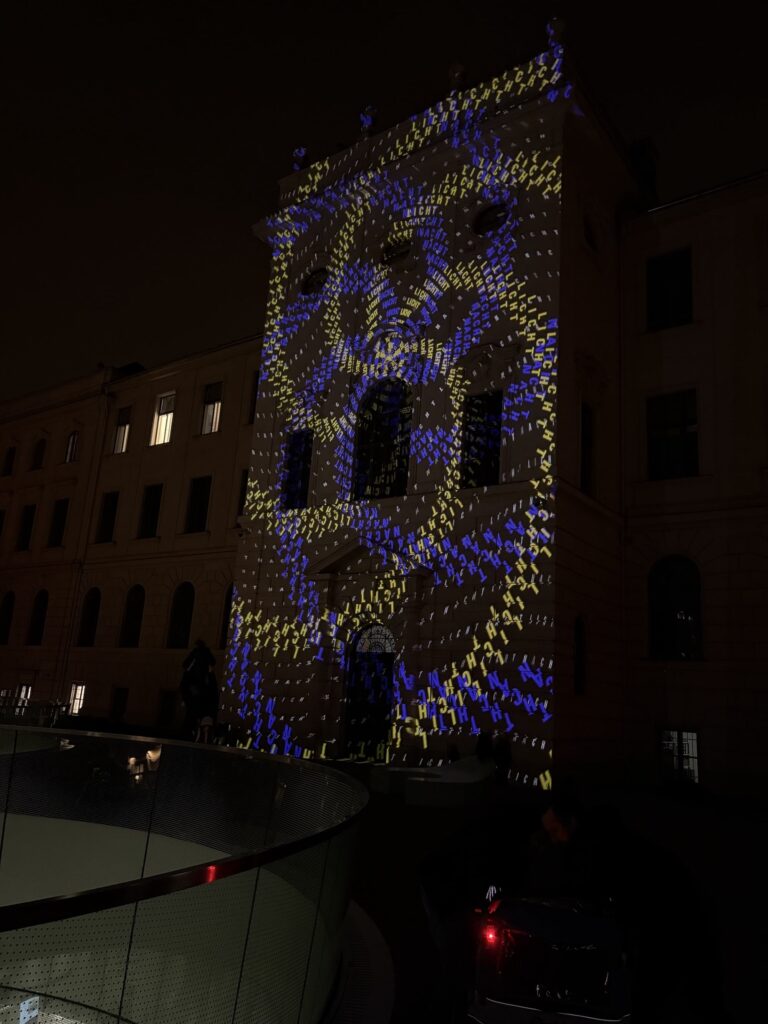
Lichtwege (Paths of Light) by Hartung & Trenz shows how closely a work can be tied to this place. The artists draw on the garden’s historic water features. Where water once ran down cascades, words and light are now projected.
You view the work from a raised balustrade, looking towards Palais Schwarzenberg. The words form circles, like the rings when a stone drops into water. The work links the garden’s history with thoughts on life, love and transience.
The season plays its part too. As the trees lose their leaves, the surfaces the light falls on change. The same projection can look different in January than in the opening weeks, which makes the garden an active part of the artwork.
What artworks can you expect?
The published route has sixteen numbered stops. That does not mean sixteen different works: Domestic & Wild by Katja Paternoster returns at several points. The programme also includes Portal by Alfredo Barsuglia, Afterglow by Joschua Hohenbrink and Connection by Bart Ensing.
A few installations are worth knowing about before you go.
Museum of the Moon: the moon up close
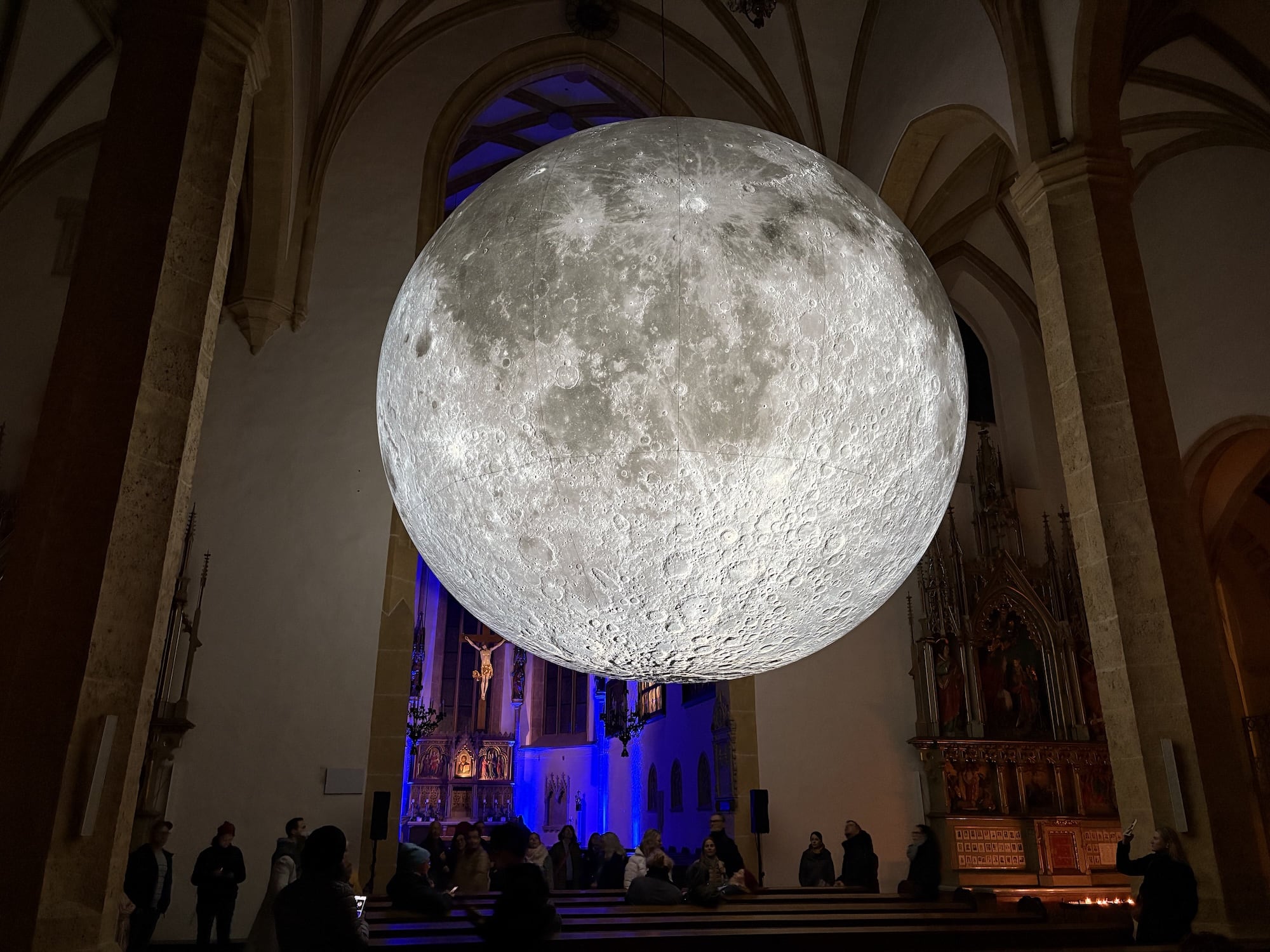
The best-known work in the programme is probably Museum of the Moon by British artist Luke Jerram. The sculpture is lit from inside and uses detailed NASA imagery of the lunar surface, so the craters and plains you see are those of the real moon.
Jerram describes the best-known seven-metre version as a scale model of about 1:500,000: one centimetre on the sculpture equals five kilometres on the moon. The work exists in several sizes, and the programme information does not say which one comes to Vienna.
The idea goes beyond a striking image. The moon has served people as a calendar, a subject of scientific research and a source of stories. By bringing it close, Jerram invites you to take a fresh look at something you normally only see from far away.
So take a moment to study the details. A wide shot shows the scale, but the craters and textures are what show how carefully the work has been made.
Flora: create the shapes yourself
At Flora by Philipp Artus, you control what you see. Using a touchpad, you change moving lines that keep combining into new shapes: sometimes round and organic, sometimes angular or restless.
Behind the installation is an algorithm that sets waves in motion and layers them on top of each other. That sounds technical, but the result invites you to play. Change the input and the movement changes, and with it the character of the image.
Artus explores how abstract shapes can still remind us of something alive. You are not supposed to spot a particular flower or animal. What is interesting is watching your own eyes search for something familiar.
Brocken 5.6: light that seems to move with you
For Brocken 5.6, Japanese artist Yasuhiro Chida uses a dark metal cube. Light enters through about 50,000 tiny holes in the walls and ceiling. Once you are inside, the beams can seem to follow you.
The work is inspired by the Brocken spectre, an optical effect in which your shadow appears huge on mist or cloud. Chida uses light and space to make you aware of your own perception. What changes when you take a step? Does the light move, or is it your position in relation to the beams?
This is an installation you have to experience in person. A photo can capture the pattern, but you only discover the effect of your own movement on the spot.
How to plan your visit
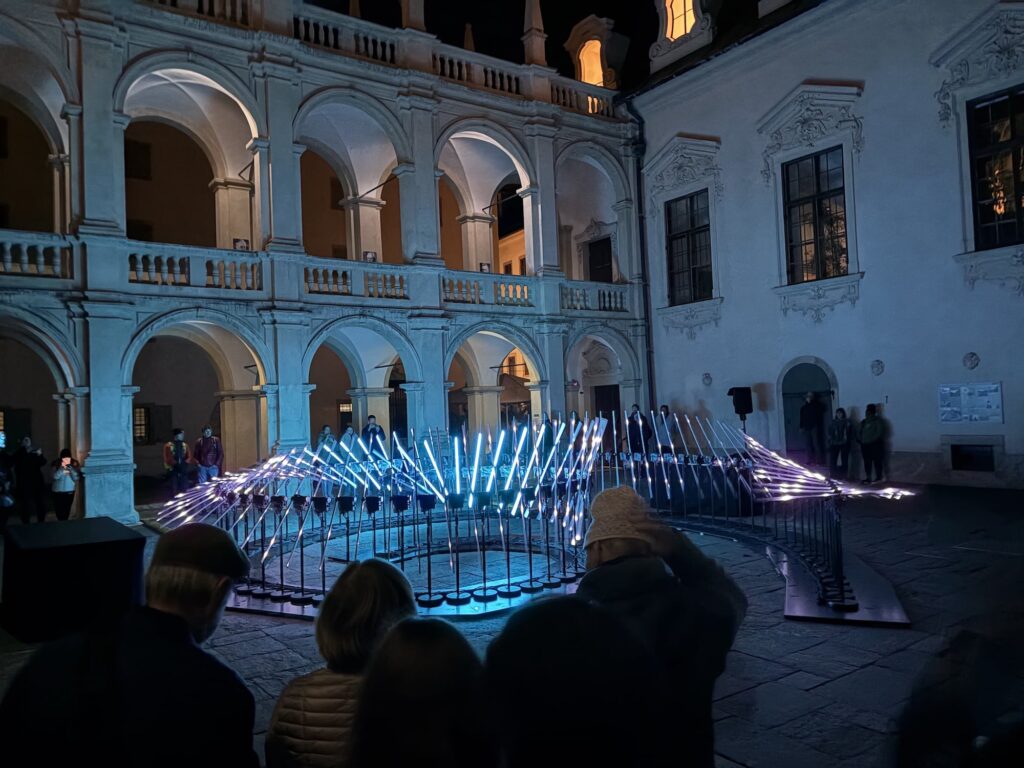
Allow at least an hour to an hour and a half for the walk. Tickets are sold in half-hour time slots: a 5.30 pm booking means you can enter between 5.30 and 6 pm.
Depending on the date, the first time slot starts at 4.30, 5 or 6 pm; the last one starts at 9 pm. In the opening week in October, the ticket shop only shows slots from 6 pm, so check what is available for your date when you book. There is also a box office on site in the evening.
We would leave some room in your evening. With interactive art, watching what other visitors do is part of the fun, so a tight dinner reservation straight after your slot can be awkward.
There is a Winter Garden on site for food and drinks. You can also combine your visit with a table at Stöckl im Park, the restaurant in the Belvedere gardens. From 20 November, the new Christmas market in front of the Upper Belvedere is a few minutes’ walk away.
With children or limited mobility
Children are welcome and pushchairs are allowed. The organisers are preparing a step-free route, but the historic park still has slopes. If you use a wheelchair or find inclines difficult, ask for the latest accessibility information before you go.
The walk is outdoors and goes ahead in winter weather. Wear warm clothes and shoes with good grip. Pets are not allowed, except assistance dogs.
With young children, we would choose an early slot. Dress for standing still rather than walking: you stop often to look, and you cool down faster than on a brisk walk.
Tickets and the right address
For your route planner, use Prinz-Eugen-Strasse 25, 1030 Vienna. The ticket shop lists the venue as Theater im Park, the open-air stage in the same garden, so search for the street address rather than the event name. Tram D runs along Prinz-Eugen-Strasse; get off at Belvederegasse or Schloss Belvedere.
Book tickets through the official Klanglicht im Park ticket shop. Choose your date, time slot and tickets for your group there. Check the shop for current prices and any children’s tickets too; at the time of writing, prices had not yet been published.
Klanglicht is most worthwhile if you enjoy looking, discovering and trying things out yourself. The works give you plenty of reasons to do that: at Flora you steer the movement, at Brocken 5.6 you test your own eyes, and at Lichtwege the garden’s history becomes visible. Plan it as a proper part of your evening, with time to simply stand still now and then.
Frequently asked questions
When is Klanglicht in Vienna?
Klanglicht im Park runs from 23 October 2026 to 10 January 2027 in the Schwarzenberg Garden, next to the Belvedere. It is the first Vienna edition of the light and sound festival from Graz.
How long does a visit to Klanglicht take?
Allow one to one and a half hours. The route has sixteen numbered stops, and several works are interactive, so you will want time to try them out.
Do you need to book tickets for Klanglicht in advance?
Booking online is recommended, because entry works with half-hour time slots and booking ahead guarantees the slot you want. There is also an evening box office on site.
Is Klanglicht suitable for children?
Yes. Children are welcome and pushchairs are allowed. A step-free route is being prepared, but the historic garden has slopes. Choose an early time slot and dress warmly, as you stand still a lot.