

Planning a trip to Vienna between September 2026 and late 2027? There’s something important you should know before you book your airport transfer. A major railway modernisation project will temporarily change how you get from Vienna International Airport into the city — and if you’re not prepared, it could catch you off guard on arrival.
The good news: Vienna still has excellent connections, and with a little planning, getting into the city is absolutely fine. In this post, we’ll walk you through exactly what’s happening, which routes are affected, and what your best options are during the works.
What’s happening on Vienna’s rail network?
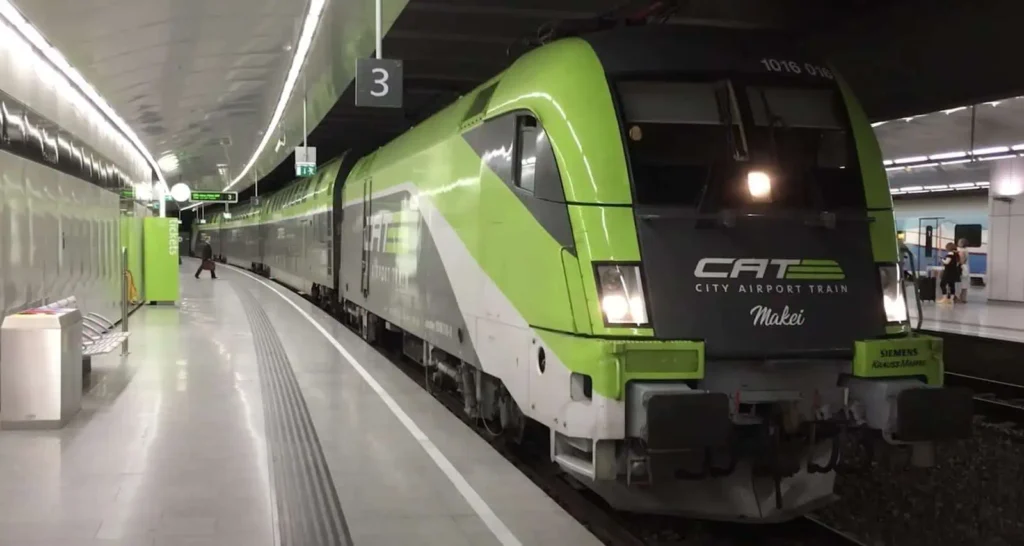
From 7 September 2026 until the end of October 2027, ÖBB (Austrian Federal Railways) will close a central section of the inner-city S-Bahn route between Wien Praterstern and Wien Hauptbahnhof. This is part of a €2.2 billion upgrade programme — one of the most ambitious infrastructure projects in Vienna’s recent history.
The works involve replacing 19th-century viaduct arches, lowering track beds, installing new signalling systems, and improving accessibility at several stations. It’s a significant investment in Vienna’s future rail capacity, but it does mean a lengthy disruption for travellers passing through the city.
The closure impacts a corridor used by more than 250,000 passengers every weekday. For airport travellers specifically, it changes two of the most popular connections: the City Airport Train (CAT) and the S7 commuter train.
What changes for each transport option?
City Airport Train (CAT) – switching to buses
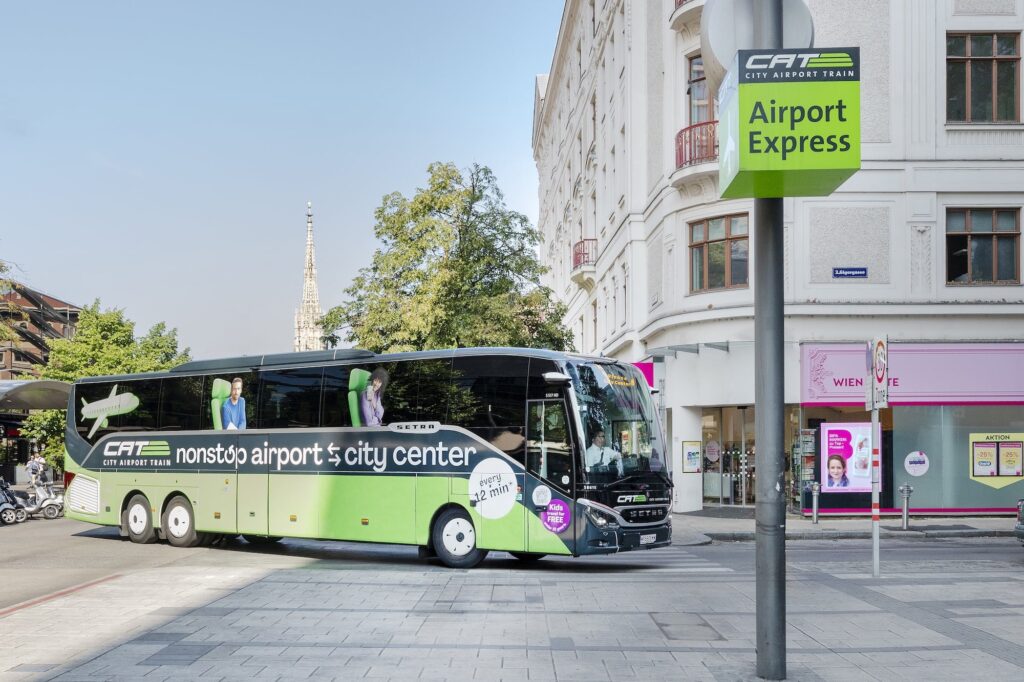
The CAT is normally the fastest and most comfortable way to reach the city centre, covering the distance to Wien Mitte in just 16 minutes. During the closure, trains won’t be able to run the full route. Instead, the CAT operator will replace the rail service with a fleet of premium Setra coaches running between Vienna Airport and Wien Mitte/Landstraße station.
These aren’t ordinary buses — they’re designed to be as comfortable as possible, with over 55 seats, extra legroom, and modern infotainment. During peak hours (7am to 7pm), they run every 12 minutes. Off-peak, every 15 minutes. The journey will take longer than 16 minutes, depending on traffic, so build in some extra time if you have a tight schedule.
One thing to note: the popular City Check-in service at Wien Mitte — where you can drop your luggage and check in for your flight before heading to the airport — will be temporarily unavailable during this period.
S7 commuter train – shorter route, with transfers
The S7 is usually the cheapest way to get from the airport to the city, and it remains in operation during the works. However, it will only run as far as St. Marx station, which is just outside the city centre rather than all the way to Wien Mitte as usual.
From St. Marx, you have a few onward options. Tram line 18 goes towards Wien Hauptbahnhof; tram line 71 heads into the city centre. You can also take bus 74A to Landstraße station, where you can pick up the U3 or U4 metro lines. It’s still manageable, but it does add a step compared to the usual direct journey.
Railjet – the standout option during the works
Here’s the good news: the Railjet long-distance trains operated by ÖBB are not affected by the closure. They continue to run twice an hour directly from Vienna Airport to Wien Hauptbahnhof (around 15 minutes, with a U1 metro connection) and on to Wien Meidling (around 30 minutes, with a U6 connection).
If you normally take the S7 or the CAT, switching to the Railjet during this period is our top recommendation. It’s fast, comfortable, and completely unaffected by the disruption. Tickets start from €4.40 and are available via the ÖBB app or at machines in the arrivals hall.
Vienna Airport Bus lines – a direct city-centre connection
Vienna’s airport bus network also offers a solid alternative during the works. Several lines run directly between the airport and key points in the city, including Morzinplatz/Schwedenplatz in the historic first district (around 22 minutes) and Wien Hauptbahnhof via Westbahnhof (around 40 minutes). These lines are completely road-based and unaffected by the rail closure.
Timetables and tickets are available on the Vienna Airport Bus website. It’s worth checking the schedule in advance, especially for early morning or late evening arrivals.
Taxis, Uber and Bolt – no change at all
If you prefer a door-to-door transfer, nothing changes. Taxis are available 24/7 outside the arrivals hall, and both Uber and Bolt operate normally at Vienna Airport. The journey to the city centre typically takes 20 to 30 minutes and costs between €30 and €45 depending on the service and time of day.
Pre-booking a taxi in advance is worth considering, especially during peak travel times when demand is high.
Quick overview: your options during the works
| Option | Status | Notes |
|---|---|---|
| CAT (City Airport Train) | ⚠️ Replaced by buses | Premium coaches, every 12–15 min. No City Check-in. |
| S7 commuter train | ⚠️ Shortened route | Runs to St. Marx only. Transfer needed to city centre. |
| Railjet (ÖBB) | ✅ Fully operational | Best train option. 15 min to Hauptbahnhof, from €4.40. |
| Airport Bus | ✅ Fully operational | Direct to city centre and Hauptbahnhof. |
| Taxi / Uber / Bolt | ✅ Fully operational | Door-to-door, 20–30 min, €30–€45. |
Our tips for travelling during the works
Take the Railjet if you want a train. It’s the simplest and most reliable rail connection during this period. It goes directly to Wien Hauptbahnhof, where you can connect to the U1 metro line and reach most parts of the city quickly.
Allow extra time if you take the CAT bus. Unlike the train, buses are subject to city traffic. Rush hour on a rainy Monday morning is a completely unique experience from a quiet Sunday afternoon. If you have a flight to catch, give yourself a comfortable buffer.
Check oebb.at before you travel. Timetables and replacement service details are updated regularly. It’s always worth a quick check the day before your journey, especially for early morning departures.
Travelling late at night? The replacement bus services and S7 may have reduced frequencies late in the evening. A taxi or Uber is the most reliable option after midnight.
Travelling with a lot of luggage or in a group? A pre-booked taxi or private transfer often works out cheaper and easier than navigating the disruptions — especially if you’re heading straight to a hotel.
Why is this happening — and is it worth it?
The closure is part of ÖBB’s long-term S-Bahn Wien upgrade, a comprehensive programme to modernise the core of Vienna’s suburban rail network. The work includes replacing century-old infrastructure, improving signalling, lowering platforms to accommodate longer trains, and making stations fully accessible.
It’s a significant temporary inconvenience — but the end result should be a more reliable, more frequent, and more comfortable rail network for decades to come. Vienna has always had one of Europe’s best public transport systems, and this investment is aimed at keeping it that way.
Bottom line
If you’re visiting Vienna during the works, don’t let this put you off. The city is still very well-connected, and with a bit of preparation you’ll get from the airport to the city centre without any real hassle. Our recommendation: take the Railjet, enjoy the short ride to Hauptbahnhof, and you’re in Vienna before you know it.
Have a wonderful trip — Vienna is absolutely worth it.
1 thought on “Vienna airport to city centre 2026 works”
Comments are closed.